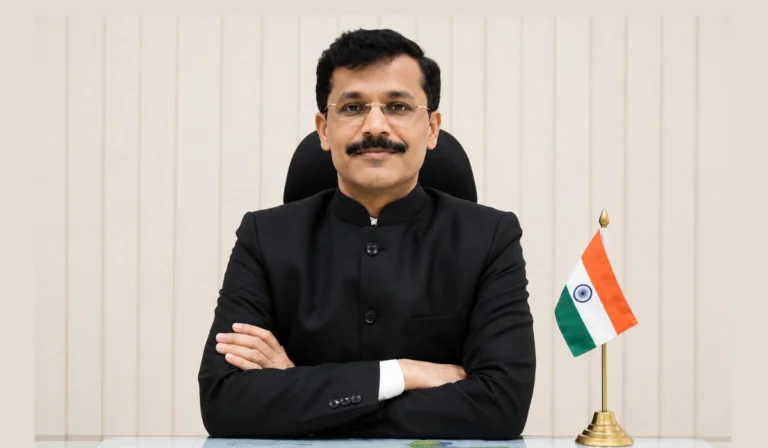
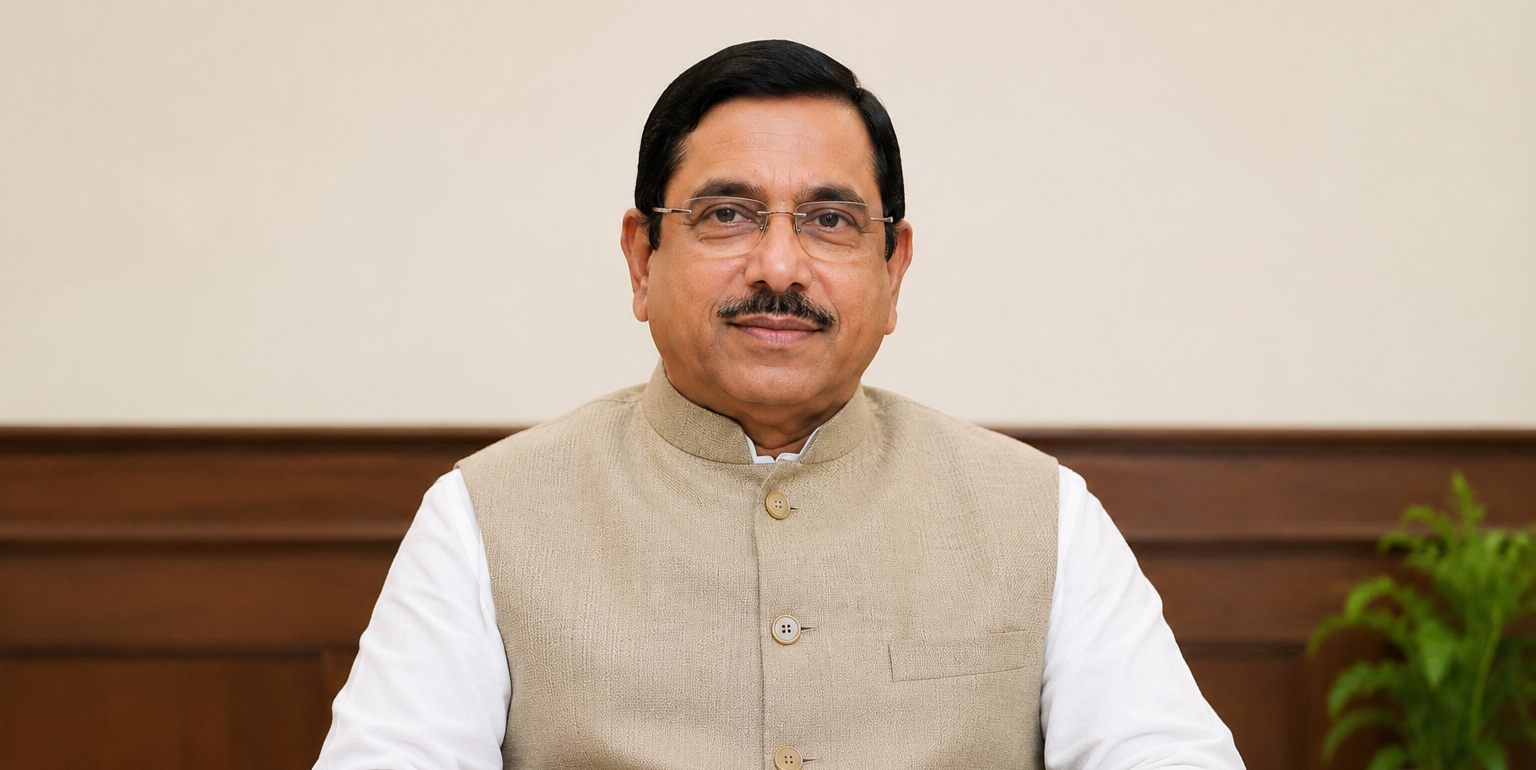
Who Is Pralhad Joshi? India’s New Education Minister — Age, Career and Full Profile
On July 25, 2026, Prime Minister Narendra Modi’s government got a new Education Minister. His name is Pralhad Joshi, and if you’re asking “wait, who?” — you’re not alone. Most Indians knew him as the Consumer Affairs and Renewable Energy Minister, not as an education face.
But his appointment didn’t come out of nowhere. It came after weeks of street protests, a paper leak scandal that affected over two million students, and the resignation of the previous minister, Dharmendra Pradhan.
This article covers everything worth knowing about Joshi: his age, his family background, how a small-town boy from Karnataka’s railway colony became a five-time MP, and why the BJP handed him one of the most scrutinized ministries in the country at this exact moment.
Quick Answer
Pralhad Joshi is a 63-year-old Bharatiya Janata Party (BJP) leader from Karnataka. Born on November 27, 1962, in Vijayapura (formerly Bijapur), he has represented the Dharwad Lok Sabha constituency since 2004 and is currently a five-term MP. On July 25, 2026, he was appointed India’s Union Education Minister, taking over from Dharmendra Pradhan, who resigned amid nationwide protests over the NEET-UG 2026 paper leak. Joshi will hold the education portfolio alongside his existing charges of Consumer Affairs, Food and Public Distribution, and New and Renewable Energy.
Table of Contents
- Key Facts at a Glance
- Why Did Dharmendra Pradhan Resign?
- Why Was Pralhad Joshi Chosen?
- Early Life and Family Background
- Education Qualification
- Entry Into Politics: The Idagah Maidan Movement
- Political Career Timeline
- Complete List of Ministries Held
- Personal Life: Wife, Children and Interests
- Net Worth
- Challenges Ahead as Education Minister
- Myths vs Facts
- Key Takeaways
- Frequently Asked Questions
Key Facts at a Glance
| Detail | Information |
|---|---|
| Full Name | Pralhad Venkatesh Joshi |
| Date of Birth | November 27, 1962 |
| Age (as of 2026) | 63 years |
| Birthplace | Vijayapura (formerly Bijapur), then Mysore State, now Karnataka |
| Education | B.A., Shri Kadasiddeshwar Arts College, Hubballi (affiliated with Karnataka University, Dharwad), 1983 |
| Political Party | Bharatiya Janata Party (BJP) |
| Constituency | Dharwad, Karnataka |
| MP Since | 2004 (five consecutive terms: 2004, 2009, 2014, 2019, 2024) |
| New Role | Union Minister of Education (from July 25, 2026) |
| Other Current Roles | Minister of Consumer Affairs, Food and Public Distribution; Minister of New and Renewable Energy |
| Past Roles | Minister of Parliamentary Affairs, Minister of Coal, Minister of Mines (2019–2024); Karnataka BJP State President (2012–2016) |
| Spouse | Jyoti Joshi (married 1992) |
| Children | Three daughters |
| Background | RSS (Rashtriya Swayamsevak Sangh) volunteer since youth; former businessman in the chemicals trade |
Why Did Dharmendra Pradhan Resign?
To understand why Joshi’s appointment matters, you need the backstory.
In May 2026, the NEET-UG entrance exam — the single test that decides medical college admission for millions of Indian students — was hit by a paper leak. This wasn’t a minor glitch. The leak forced the government to cancel results, order a CBI investigation, and conduct a full re-test for more than two million candidates on June 21, 2026.
Students were angry, and understandably so. A youth movement calling itself the Cockroach Janta Party (CJP) organized weeks of street protests, with Jantar Mantar in Delhi becoming the main protest site. The demonstrations grew large enough that some opposition leaders disrupted Parliament in solidarity, and it became one of the toughest political moments of Modi’s third term.
By July 25, 2026, the pressure had built to a point where Pradhan submitted his resignation. In his resignation letter, he said he was stepping down out of concern for students, not because of personal considerations, and that he did not want India’s youth caught in confusion over the controversy. PM Modi accepted the resignation the same day.
Within hours, celebrations broke out among protesters at Jantar Mantar, and the CJP movement announced it was calling off its agitation.
In short: Pradhan didn’t resign over one bad decision. He resigned after weeks of sustained public pressure over an exam system that failed millions of students at once.
Why Was Pralhad Joshi Chosen?
This is the question most people are actually asking. Joshi has no prior background in education policy. So why him?
A few likely reasons stand out, based on his profile:
- He’s a trusted Modi loyalist. Joshi has been a Cabinet minister continuously since 2019 and is widely described as close to the Prime Minister.
- He has a track record of handling difficult portfolios. He steered contentious legislation, including the abrogation of Article 370 and the Citizenship Amendment Bill, through Parliament in his earlier role as Minister of Parliamentary Affairs — a job that requires managing political fire, not just paperwork.
- He’s an experienced administrator, not a fresh face. With five Lok Sabha wins and multiple ministries under his belt (Coal, Mines, Parliamentary Affairs, Consumer Affairs, Renewable Energy), he’s seen as someone who can stabilize a ministry under public scrutiny.
- Continuity over disruption. Rather than bringing in someone new, the government added the education portfolio to an already-serving minister — a common practice in Indian cabinet reshuffles when a change needs to happen quickly.
Whether this experience translates into fixing India’s exam infrastructure is a separate question — and one this article won’t guess at. It’s genuinely too early to say.
Early Life and Family Background
Pralhad Venkatesh Joshi was born on November 27, 1962, in Vijayapura (called Bijapur at the time, in what was then Mysore State — now Karnataka).
He grew up in a modest, railway-employee household. His father, Venkatesh Joshi, worked with Indian Railways. His mother, Malatibai Joshi, raised the family with what several biographical sources describe as strong traditional values. Pralhad was the third child in the family.
Because his father worked for the railways, much of Joshi’s childhood was spent around Hubballi (Hubli), a major railway hub in northern Karnataka. This wasn’t a political or wealthy household — it was a working-class railway family, and that detail matters, because it’s part of why Joshi is often described in Karnataka politics as someone who “came up the hard way” rather than through family connections.
Think of it like this: if you compare Joshi’s start to many Indian politicians who inherit their seats from a parent, his path looks completely different. He built his political identity from grassroots organizing, not family legacy.
Education Qualification
Joshi’s education followed a fairly standard path for a small-town Karnataka student of his generation:
- Primary education — Railway School, Hubballi
- Secondary education — New English School, Hubballi
- Higher education — Bachelor of Arts (B.A.), Shri Kadasiddeshwar Arts College, Hubballi, affiliated with Karnataka University, Dharwad (graduated 1983)
He does not hold a postgraduate degree, based on available public records and election affidavits. After completing his B.A., he moved into business — co-founding a chemicals trading venture — before politics took over his life full-time.
This matters for one honest reason: some critics have pointed out that a B.A. graduate with a business background, and no direct experience in education administration, is now responsible for the Ministry of Education. Supporters counter that ministerial roles in India’s parliamentary system are about governance and political management, not subject-matter expertise — the ministry itself has secretaries, bureaucrats, and domain experts who handle technical policy. Both points are reasonable, and readers can weigh them for themselves.
Entry Into Politics: The Idagah Maidan Movement
Joshi’s political career didn’t start with an election. It started with a protest.
In the early 1990s, he became associated with the Rashtriya Swayamsevak Sangh (RSS), a Hindu nationalist volunteer organization often described as the ideological parent body of the BJP. Through the RSS, Joshi led a movement between 1992 and 1994 to hoist the Indian tricolour flag at Idagah Maidan (also called Kittur Rani Chennamma Maidan) in Hubli, Karnataka — a disputed piece of land that became a flashpoint of communal tension in the region.
This movement made him a known local figure. He also organized what was called the “Save Kashmir Movement” during the same period, further building his profile within BJP circles in Dharwad district.
He was subsequently elected president of the BJP’s Dharwad district unit — his first formal political post — before contesting for Parliament.
Why this matters today: the Idagah Maidan dispute didn’t end in the 1990s. It went through decades of litigation, and the Supreme Court eventually upheld a Karnataka High Court order restoring ownership of the land to the Hubli-Dharwad Municipal Corporation. It’s a useful example of how a local land and identity dispute can become a career-launching platform in Indian regional politics.
Political Career Timeline
Here’s Joshi’s career mapped out year by year, so you can see the full arc at once.
| Year | Milestone |
|---|---|
| 1992–1994 | Leads Idagah Maidan flag-hoisting movement in Hubli |
| Early 1990s | Elected BJP president, Dharwad district |
| 2004 | Wins Dharwad Lok Sabha seat for the first time, defeating INC’s B.S. Patil |
| 2009 | Re-elected from Dharwad with the second-highest victory margin among Karnataka’s 28 constituencies that year |
| 2012–2016 | Serves as BJP Karnataka State President |
| 2014 | Wins third consecutive term from Dharwad |
| 2014–2018 | Member, Panel of Chairpersons, Lok Sabha |
| 2019 | Wins fourth term from Dharwad by a margin of over one lakh votes |
| 2019 | Appointed Union Cabinet Minister — Parliamentary Affairs, Coal, and Mines |
| 2019–2024 | Steers key legislation through Parliament, including bills related to Article 370 abrogation and the Citizenship Amendment Act |
| 2024 | Wins a record fifth consecutive term from Dharwad (though with a reduced victory margin, which he publicly acknowledged) |
| June 2024 | Appointed Minister of Consumer Affairs, Food and Public Distribution, and Minister of New and Renewable Energy |
| July 25, 2026 | Appointed Union Education Minister, following Dharmendra Pradhan’s resignation |
Joshi’s fifth consecutive win from Dharwad in 2024 set a record for that constituency — no other candidate had won it five times in a row.
Complete List of Ministries Held
Joshi’s portfolio history shows a pattern: the BJP tends to move him into ministries that need firm, experienced handling.
- Minister of Parliamentary Affairs (2019–2024)
- Minister of Coal (2019–2024)
- Minister of Mines (2019–2024)
- Minister of Consumer Affairs, Food and Public Distribution (2024–present)
- Minister of New and Renewable Energy (2024–present)
- Minister of Education (2026–present) — his newest and most closely watched charge
Notice that he’s held five different ministries in the space of about seven years. That’s an unusually broad portfolio spread, even by Indian cabinet standards, and it partly explains why he was seen as a safe, experienced pick to add education to his plate on short notice.
Personal Life: Wife, Children and Interests
Joshi married Jyoti Joshi in 1992. The couple has three daughters.
Outside politics, he’s known for a fairly low-key personal life:
- Interested in Hindustani classical music
- Enjoys reading
- Plays recreational games including chess, badminton, and carrom
- Follows cricket
He maintains his primary residence connection to Karnataka (Hubballi and Bengaluru) despite living and working from Delhi for his ministerial duties. His official residence is listed as 11, Akbar Road, New Delhi.
Net Worth
Based on election affidavits and public asset declarations, Joshi’s net worth is estimated in the range of ₹15–20 crore. This includes ancestral family land, residential property in Hubballi and Bengaluru, fixed deposits, and long-term equity investments built up over decades in business and public life.
A caveat worth stating plainly: these figures come from self-declared election affidavits, which are the standard public disclosure method for Indian politicians, but they are not independently audited in the way corporate financial statements are. Treat the number as a reasonable public estimate, not an exact, verified figure.
Challenges Ahead as Education Minister
Joshi isn’t stepping into a quiet ministry. Here’s what’s actually on his desk from day one:
- Restoring trust in NEET and NTA. The National Testing Agency’s credibility took a direct hit from the 2026 leak. Students and parents will want visible, structural fixes — not just reassurances.
- Delivering on the CBT promise. The government has already announced that NEET will shift to a Computer-Based Test (CBT) format starting the following year, specifically to reduce leak risk. Implementing this at the scale India needs — with reliable internet and testing infrastructure across rural and urban centers alike — is a massive logistical task.
- Managing a politically charged student base. The Cockroach Janta Party movement showed that Indian youth are willing to organize and sustain pressure over exam fairness. Joshi will be watched closely for how he engages with that same demographic.
- Balancing three ministries at once. He continues to hold Consumer Affairs, Food and Public Distribution, and Renewable Energy alongside Education. Whether that’s sustainable long-term, or whether education gets a dedicated minister later, remains to be seen.
- Continuing NEP 2020 implementation. The National Education Policy rollout, started under his predecessors, is still an ongoing, multi-year process that doesn’t pause for a change in minister.
Myths vs Facts
| Myth | Fact |
|---|---|
| Joshi has a background in education policy | He has no direct education-sector experience; his prior ministries were Coal, Mines, Parliamentary Affairs, Consumer Affairs, and Renewable Energy |
| Joshi is a new face in the BJP | He has been a sitting Cabinet minister continuously since 2019 and an MP since 2004 |
| Dharmendra Pradhan resigned over a single bad decision | His resignation followed weeks of sustained nationwide protests over the NEET-UG 2026 paper leak, not one isolated event |
| The NEET 2026 leak is the same as the 2024 controversy | These are two separate incidents in different years — the 2024 paper leak and the 2026 paper leak were distinct controversies, though both involved NEET-UG |
| Joshi comes from a political family | He comes from a working-class railway employee’s household with no prior political lineage |
Key Takeaways
- Pralhad Joshi, 63, is India’s new Union Education Minister, appointed July 25, 2026.
- He replaces Dharmendra Pradhan, who resigned amid nationwide protests over the NEET-UG 2026 paper leak that affected over two million students.
- Joshi is a five-term MP from Dharwad, Karnataka, and a longtime RSS-linked BJP leader.
- He holds a B.A. from Shri Kadasiddeshwar Arts College and has no formal education-sector background.
- He continues to hold three other portfolios: Consumer Affairs, Food and Public Distribution, and New and Renewable Energy.
- His biggest early task is restoring public trust in India’s exam system, including the shift to Computer-Based Testing for NEET.
Frequently Asked Questions
1. How old is Pralhad Joshi?
Pralhad Joshi is 63 years old, born on November 27, 1962.
2. Where is Pralhad Joshi from?
He was born in Vijayapura (formerly Bijapur), Karnataka, and represents the Dharwad Lok Sabha constituency, also in Karnataka.
3. What is Pralhad Joshi’s educational qualification?
He holds a Bachelor of Arts (B.A.) degree from Shri Kadasiddeshwar Arts College, Hubballi, affiliated with Karnataka University, Dharwad, completed in 1983.
4. Why did Dharmendra Pradhan resign as Education Minister?
He resigned on July 25, 2026, after weeks of youth-led protests over the NEET-UG 2026 paper leak, which forced a nationwide re-test for over two million candidates.
5. Does Pralhad Joshi have experience in education?
No. His previous ministries were Coal, Mines, Parliamentary Affairs, Consumer Affairs and Food and Public Distribution, and New and Renewable Energy. Education is a new portfolio for him.
6. What other ministries does Pralhad Joshi currently hold?
Alongside Education, he continues to serve as Minister of Consumer Affairs, Food and Public Distribution, and Minister of New and Renewable Energy.
7. How many times has Pralhad Joshi won elections?
He has won the Dharwad Lok Sabha seat five consecutive times: 2004, 2009, 2014, 2019, and 2024.
8. Is Pralhad Joshi married?
Yes, he married Jyoti Joshi in 1992. They have three daughters.
9. What is Pralhad Joshi’s net worth?
Based on public election affidavits, his declared net worth is estimated between ₹15 crore and ₹20 crore.
10. What is the Cockroach Janta Party (CJP)?
It’s a youth-led protest movement that organized sustained demonstrations, mainly at Jantar Mantar in Delhi, demanding accountability over the NEET-UG 2026 paper leak. The group ended its protests after Pradhan’s resignation.
Conclusion
Pralhad Joshi’s appointment as Education Minister isn’t really a story about education policy — at least not yet. It’s a story about political trust. A generation of exam-taking students forced a sitting Cabinet minister to resign through sustained, organized protest, and the government responded by handing the portfolio to one of its most tested political operators.
Whether Joshi becomes known as the minister who fixed India’s exam system, or just another name in a long list of education ministers, depends entirely on what happens next — particularly whether the promised shift to Computer-Based Testing actually restores confidence for the millions of students who take NEET every year.
For now, what we know for certain is this: a 63-year-old railway employee’s son from Karnataka, who started his public life protesting over a flag and a maidan in Hubli, now controls one of the most emotionally significant ministries in the country.