After CJP, Now E20 Party: Inside the New Jantar Mantar Protest Against Gadkari’s Petrol Policy
Jantar Mantar has seen this movie before. A satirical online joke turns into a hashtag. The hashtag turns into a crowd. The crowd turns into a headline the government can’t ignore.
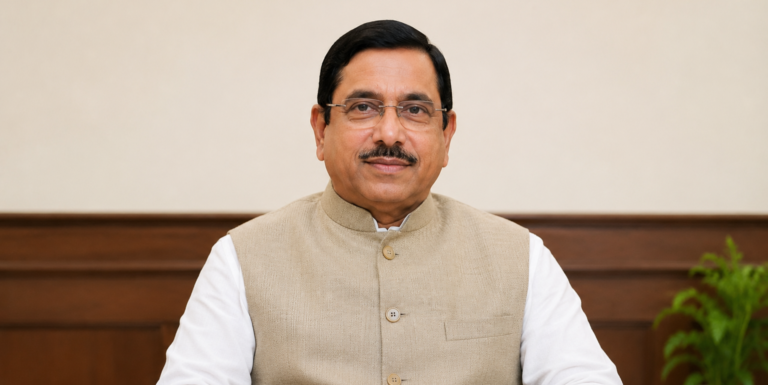
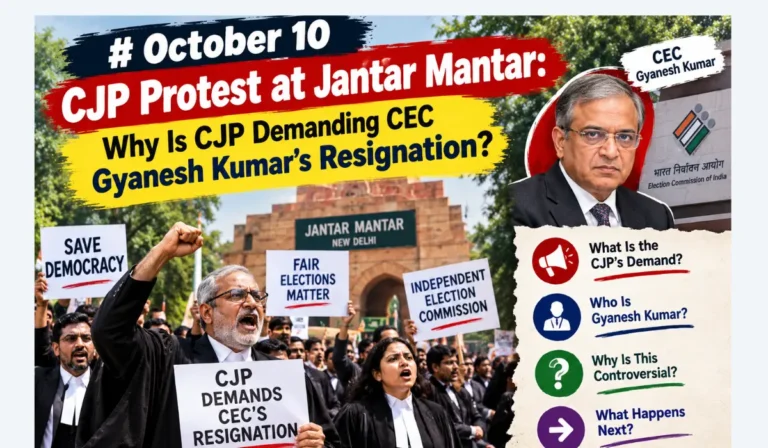
That’s exactly what happened with the Cockroach Janta Party (CJP), the student movement that forced Education Minister Dharmendra Pradhan to resign after weeks of protest over the NEET-UG paper leak. We covered that full story, along with the profile of new Education Minister Pralhad Joshi, in our earlier piece on who replaced Dharmendra Pradhan as Education Minister.
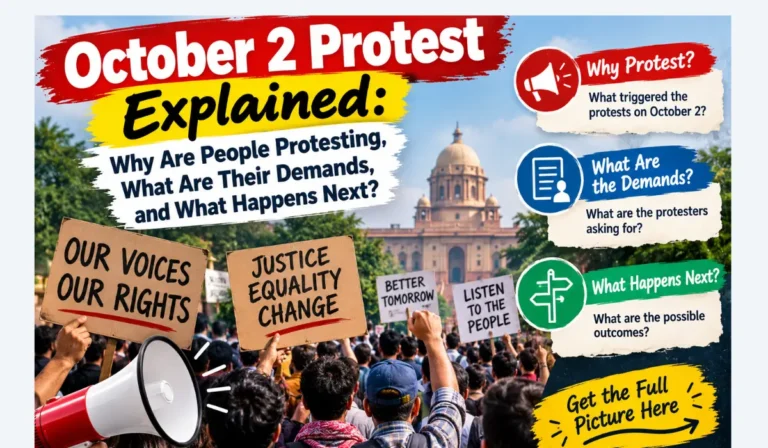
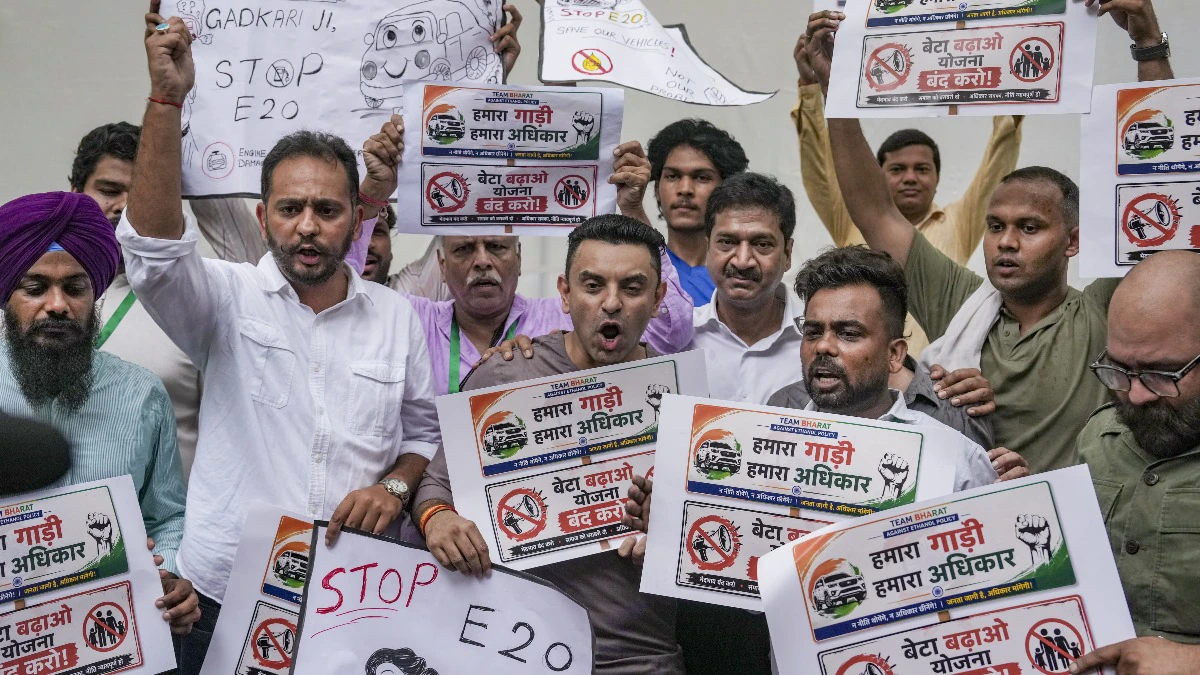
Barely a week after CJP declared victory and packed up its protest banners, a new movement showed up at the same square — this time aimed at Union Road Transport Minister Nitin Gadkari, and his signature policy: E20 ethanol-blended petrol.
This is the story of how that happened, who’s behind it, and whether it’s likely to work the same way CJP did.
If you want the full background on the actual E20 fuel debate — Gadkari’s statements, the Sourav Joshi Mercedes controversy, and what the science really says — we’ve broken all of that down separately in our complete E20 fuel controversy explainer. This article focuses specifically on the protest itself: the people, the pattern, and the politics of how it grew.
Quick Answer
A new protest movement called the E20 Janta Party has emerged at Delhi’s Jantar Mantar, directly modeled on the Cockroach Janta Party’s (CJP) style of satire-driven, youth-led mobilization. Where CJP protested the NEET-UG paper leak and forced Dharmendra Pradhan’s resignation, the E20 Janta Party is protesting the government’s ethanol-blended petrol policy, championed by Union Minister Nitin Gadkari. Activist Tehseen Poonawalla organized a physical protest at Jantar Mantar under the banner “Team Bharat Against the Ethanol Scam,” while an anonymous social media account gained over 48,000 Twitter/X followers and 100,000+ Instagram followers within roughly 24 hours. The demand is narrow and specific: let fuel stations sell 100% petrol alongside E20, so consumers get to choose.
Table of Contents
- The Pattern: How CJP Became the Template
- Timeline: From CJP’s Victory to E20’s Launch
- Who’s Actually Behind the E20 Janta Party?
- The Jantar Mantar Protest: What Happened on the Ground
- CJP vs E20 Janta Party: Side-by-Side Comparison
- Why This Movement Is Different From a Political Protest
- The Government’s Response So Far
- Is This a Real Grassroots Movement or Something Else?
- Will It Work Like CJP Did?
- Key Takeaways
- Frequently Asked Questions
The Pattern: How CJP Became the Template
To understand why the E20 Janta Party looks and sounds the way it does, you need to understand what made CJP work in the first place.
The Cockroach Janta Party started as a joke. Boston University graduate Abhijeet Dipke posted a simple, almost absurd idea online: what if all cockroaches came together? It wasn’t a policy document. It wasn’t a party manifesto. It was a meme.
But it landed at exactly the right moment — millions of NEET-UG students were furious about a paper leak that forced a nationwide re-test, and CJP gave that fury a shape: funny, shareable, and impossible to dismiss as “just angry students.” Within weeks, it had grown from an online joke into a sustained protest at Jantar Mantar, and it ended with the resignation of a sitting Union Cabinet minister.
That’s the exact template the E20 Janta Party is now running. Same square. Same meme-first tone. Same core insight: satire spreads faster than a policy complaint ever could.
Timeline: From CJP’s Victory to E20’s Launch
| Date | Event |
|---|---|
| May 2026 | NEET-UG paper leak triggers national outrage; CJP movement begins as satirical online joke |
| June 21, 2026 | Nationwide NEET-UG re-test conducted for over 2 million candidates |
| July 25, 2026 | Dharmendra Pradhan resigns as Education Minister amid CJP-led protests; Pralhad Joshi appointed as replacement |
| July 25, 2026 | CJP celebrates at Jantar Mantar and announces it is calling off its agitation |
| Weeks prior (ongoing) | Public frustration builds over E20 petrol mileage complaints; Gadkari dares critics to “name one” damaged vehicle |
| Early-to-mid July 2026 | Tehseen Poonawalla organizes Jantar Mantar protest under “Team Bharat Against the Ethanol Scam”; plans a follow-up “Gaadi March” |
| July 26, 2026 | E20 Janta Party account launches online, directly referencing CJP’s founding message |
| July 26–27, 2026 | Account gains 25,000 followers within hours, crosses 48,000 by the next morning; Instagram passes 100,000 |
| July 27, 2026 | AAP leader Manish Sisodia reposts the movement, boosting its reach; PIB India responds defending the ethanol program |
Notice the gap: CJP’s resignation win and the E20 Janta Party’s launch happened within roughly the same week. That’s not a coincidence — it’s a direct handoff of momentum, language, and even audience from one protest movement to the next.
Who’s Actually Behind the E20 Janta Party?
This is where the story gets more complicated than a simple “students did it again” narrative.
On the ground, physical protest side: Political commentator and activist Tehseen Poonawalla has been the clearest, named face of organized opposition to E20. He organized the Jantar Mantar demonstration under the banner “Team Bharat Against the Ethanol Scam,” describing participants as ordinary, middle-class vehicle owners rather than political operatives. He’s also planned a follow-up “Gaadi March” and has publicly said he has vehicle owners ready to show Gadkari their damaged cars directly.
On the online, viral movement side: the E20 Janta Party’s actual account (@E20Party) has an unknown founder. Unlike CJP, where Abhijeet Dipke was identified early and became something of a spokesperson, nobody has stepped forward to claim ownership of the E20 Janta Party handle.
One detail worth flagging clearly: the account has reportedly been traced to a location outside India, specifically Malaysia, according to reporting on the movement. That doesn’t automatically make the movement fake — plenty of diaspora-run accounts amplify genuine domestic issues — but it does mean the “grassroots youth movement” framing needs a caveat that CJP’s founder-identified origin story didn’t need.
The separate association: the Delhi Taxi and Tourist Transporters and Tour Operators Association has also organized its own march to Parliament, citing fuel efficiency and maintenance cost concerns specific to commercial vehicles that log far higher daily mileage than private cars.
So in reality, “the E20 protest” is actually three loosely connected threads — a named activist’s street protest, an anonymous viral social account, and an independent trade association’s grievance — that have merged into one media narrative because they share a common target and timing.
The Jantar Mantar Protest: What Happened on the Ground
Poonawalla’s protest was framed deliberately as a consumer-rights issue, not a party-political one. His central argument: the people affected are “middle-class families, decent, hardworking people” who feel cheated because their vehicles — bought with real, hard-earned money — are now behaving unpredictably.
He warned that if permission for the Jantar Mantar protest wasn’t granted, demonstrators might instead gather outside Gadkari’s residence directly — a pointed response to the minister’s own public challenge asking critics to “name one” affected vehicle owner.
That challenge-and-response dynamic is worth sitting with for a second. Gadkari’s dare was meant to shut down the criticism by demanding proof. Instead, it appears to have handed protesters a specific, quotable moment to organize around — similar to how a single dismissive comment can sometimes accelerate a protest rather than defuse it.
CJP vs E20 Janta Party: Side-by-Side Comparison
| Feature | Cockroach Janta Party (CJP) | E20 Janta Party |
|---|---|---|
| Origin | Satirical post by an identified individual, Abhijeet Dipke | Anonymous account, founder unknown |
| Core issue | NEET-UG 2026 paper leak | E20 ethanol-blended petrol policy |
| Target | Education Minister Dharmendra Pradhan | Road Transport Minister Nitin Gadkari |
| Physical protest location | Jantar Mantar, Delhi | Jantar Mantar, Delhi |
| Named organizer for street action | Youth-led, decentralized | Tehseen Poonawalla (“Team Bharat Against the Ethanol Scam”) |
| Outcome so far | Minister’s resignation | Ongoing; no policy change yet |
| Core demand | Accountability and re-test for paper leak | Consumer choice between E20 and 100% petrol at fuel stations |
| Growth speed | Gradual build over weeks | Extremely fast — tens of thousands of followers within a day |
| Political amplification | Cross-party solidarity in Parliament | AAP leader Manish Sisodia’s repost |
| Government’s framing of the movement | Eventually acknowledged and acted on | Currently dismissed as logistically unfeasible, not directly attacked as “paid” (unlike broader E20 criticism) |
Why This Movement Is Different From a Political Protest
Both Poonawalla and the E20 Janta Party account have gone out of their way to frame this as not a party-political attack. The E20 Janta Party’s own messaging has been explicit: it isn’t asking for subsidies, free fuel, or a rollback of ethanol blending altogether. Its one specific, narrow ask is consumer choice — the option to buy pure petrol at the same pump.
That’s a meaningfully different demand than CJP’s, which centered on accountability for an exam failure. The E20 movement isn’t arguing that ethanol blending is bad policy in principle — it’s arguing that removing consumer choice, without adequate transition time for older vehicles, is the actual problem.
This narrower framing might be a deliberate strategic choice. A demand for “just give us the option” is harder for the government to publicly reject than a demand to scrap an entire national energy policy — and harder to dismiss as “anti-development” or “anti-farmer,” criticisms the government has used against broader E20 opposition.
The Government’s Response So Far
The response has been notably different in tone from how Gadkari personally addressed earlier E20 criticism.
Where Gadkari called broader social media criticism a “paid, politically motivated campaign,” the more recent institutional response — through the Petroleum Ministry and PIB India — has focused on logistics rather than motive. Officials have said offering separate fuel grades at every pump is not logistically feasible, pointing to roughly ₹1 lakh crore already invested in scaling up ethanol production infrastructure, including funding from public sector banks.
That’s a subtly important shift. Dismissing a movement as “paid” is a motive-based counterattack. Explaining why a demand is logistically hard is a policy-based response. Whether that shift was intentional or coincidental, it suggests the government may be treating this movement’s specific, narrow ask more seriously than it treated earlier, broader E20 criticism.
Is This a Real Grassroots Movement or Something Else?
This is the fair question, and it deserves an honest, non-committal answer rather than a confident one.
Evidence that it reflects genuine public sentiment:
- The underlying complaints — mileage drops, older vehicle concerns, maintenance costs — were already being raised independently by real vehicle owners, taxi associations, and journalists well before this account existed.
- Poonawalla’s Jantar Mantar protest, with named organizers and a stated middle-class base, predates and runs alongside the anonymous account.
- The demand (consumer choice, not policy rollback) matches concerns already documented in mainstream reporting on the issue.
Reasons for healthy skepticism:
- The account’s founder is anonymous, unlike CJP’s identified origin.
- It has reportedly been traced to a location outside India.
- Its extremely fast follower growth — tens of thousands within hours — is unusual even by viral standards and hasn’t been independently explained.
The most accurate way to describe it: the E20 Janta Party appears to be an anonymously-run amplifier of a genuine, pre-existing public grievance, riding on CJP’s proven playbook and timing. Whether it’s spontaneous or coordinated behind the scenes isn’t something that can be verified from public information right now — and any article claiming certainty either way would be overstating what’s actually known.
Will It Work Like CJP Did?
A few structural differences suggest this movement faces a harder path than CJP did, even with a faster social media launch:
- CJP’s issue affected a single, unified group directly and personally — every NEET aspirant had a personal stake in exam fairness. E20 affects vehicle owners broadly, but with wildly different levels of impact depending on vehicle age, type, and driving pattern — a more fragmented base.
- CJP had one clear demand: accountability for a specific failure. The E20 movement’s demand — pump-level choice — is narrower and more negotiable, which could make it easier to satisfy without a dramatic resignation, but also easier for the government to slow-walk indefinitely.
- Gadkari has not resigned or shown signs of reversing course, unlike Pradhan, and has framed the criticism as political rather than acknowledging it as a policy gap requiring action.
- The anonymous origin may limit the movement’s ability to negotiate directly or be taken as seriously in formal talks, compared to CJP, which eventually had recognizable voices the system could engage with.
None of this means the movement will fail — narrow, specific demands sometimes succeed precisely because they’re easier for a government to grant without appearing to lose face. But it does mean betting on an identical outcome to CJP, purely because the format looks similar, would be a mistake.
Key Takeaways
- The E20 Janta Party is a new protest movement targeting Nitin Gadkari’s E20 petrol policy, directly modeled on the Cockroach Janta Party’s (CJP) satire-driven playbook.
- It emerged within roughly a week of CJP’s own victory — Dharmendra Pradhan’s resignation as Education Minister.
- The movement has three separate but connected threads: Tehseen Poonawalla’s physical Jantar Mantar protest, an anonymous fast-growing social media account, and a separate taxi operators’ association march.
- Unlike CJP, the E20 Janta Party’s online account has an unknown founder and has reportedly been traced to a location outside India — a detail that invites healthy scrutiny without necessarily discrediting the underlying public concern.
- Its core demand is narrow: consumer choice between E20 and 100% petrol at the pump, not a full policy rollback.
- The government’s official response has shifted toward a logistics-based argument (citing ₹1 lakh crore in ethanol infrastructure investment) rather than dismissing it outright as “paid” criticism.
- Structural differences — a more fragmented affected base, no resignation pressure yet, and an anonymous origin — mean this movement’s outcome isn’t guaranteed to mirror CJP’s.
Frequently Asked Questions
1. What is the E20 Janta Party?
It’s a satirical, citizen-led social media movement protesting India’s E20 ethanol-blended petrol policy, modeled closely on the Cockroach Janta Party’s (CJP) style and timing.2. Is the E20 Janta Party connected to CJP?
Not officially. It directly references CJP’s founding message and mirrors its meme-based, Jantar Mantar-centered approach, but it’s a separate, distinct movement with a different target and demand.3. Who started the E20 Janta Party?
The founder is currently unknown. Unlike CJP’s identified founder Abhijeet Dipke, the E20 Janta Party’s account has remained anonymous.4. Who organized the physical protest at Jantar Mantar?
Activist and political commentator Tehseen Poonawalla organized the on-ground demonstration under the banner “Team Bharat Against the Ethanol Scam.”5. What does the E20 Janta Party actually want?
Its specific demand is for fuel stations to sell 100% petrol alongside E20, giving consumers the choice, rather than removing E20 or ethanol blending altogether.6. How fast did the E20 Janta Party grow online?
It reportedly gained around 25,000 followers within hours of launching, crossed 48,000 by the next morning, and its Instagram page passed 100,000 followers over the same weekend.7. Has the government responded to the E20 Janta Party?
Yes. The Petroleum Ministry and PIB India have responded that offering separate fuel grades at every pump station is logistically unfeasible, citing roughly ₹1 lakh crore already invested in ethanol infrastructure.8. Is the E20 Janta Party a genuine grassroots movement?
It’s difficult to say with certainty. The underlying complaints it channels are genuine and pre-date the account, but its anonymous origin and reported location outside India warrant reasonable scrutiny.9. Will the E20 protest lead to Gadkari resigning, like Pradhan did?
There’s no indication of that currently. Gadkari has not shown signs of stepping down or reversing the E20 policy, and has instead defended it as safe and economically beneficial.10. Where can I read more about the actual E20 fuel debate?
For the full breakdown of Gadkari’s statements, car owner complaints, the Sourav Joshi Mercedes controversy, and what the science says, see our detailed explainer: The E20 Fuel Controversy: What Gadkari Says, What Car Owners Claim, and What Sourav Joshi Got Wrong.
Conclusion
What’s happening at Jantar Mantar right now isn’t really about petrol, or exams, or any single minister. It’s about a repeatable format: take a genuine grievance, wrap it in humor, launch it fast online, and let momentum do what a formal complaint letter never could.
CJP proved the format works. Whether the E20 Janta Party proves it works twice in a row — against a different minister, a more fragmented issue, and an anonymous origin story — is still an open question. What’s certain is that Indian protest culture just got a new playbook, and it’s very likely we’ll see it used again on the next issue that makes people angry enough to log on and show up.