Why Is Extreme Weather Getting Worse? Nepal Floods, Spain Storms & What Comes Next
Turn on the news this year and you’ll find a pattern that’s hard to miss. Villages washed away in the Himalayas. Cities in southern Spain under water for the third or fourth time in a single season. Ash from a volcano that had been silent for 12,000 years drifting over Delhi and Gujarat. These aren’t isolated headlines — they’re pieces of the same story: a warming planet is changing how weather behaves, and the places least prepared for it are paying the highest price.
This piece walks through what actually happened in Nepal and Spain, why disasters like this keep intensifying, what’s being done to control the damage, and what the future looks like if current trends continue. We’ll also look at the Ethiopian volcanic eruption that sent an ash cloud all the way to Indian skies — a reminder that “extreme weather” isn’t the only natural hazard putting pressure on the world right now.
Key Takeaways
- A glacier collapse in the Nepal–Tibet border region triggered flash floods on 26 August 2026 that killed over 350 people, with more than 1,000 still unaccounted for.
- Scientists say climate change is very likely accelerating the glacial melt behind this kind of disaster.
- Spain has been hit by an unusually intense run of named storms in 2026, following the catastrophic 2024 Valencia floods that killed 237 people.
- A warming Mediterranean and Atlantic, combined with a weakened Azores anticyclone, is driving heavier and more frequent rain events across the Iberian Peninsula.
- Ethiopia’s Hayli Gubbi volcano erupted in November 2025 for the first time in roughly 12,000 years, sending an ash cloud across the Arabian Peninsula into Indian airspace and disrupting flights.
- Early warning systems, glacial lake monitoring, and stricter flood-zone construction rules are the main tools being used to reduce casualties — but adaptation is struggling to keep pace with the rate of change.
The Nepal Floods: What Actually Happened
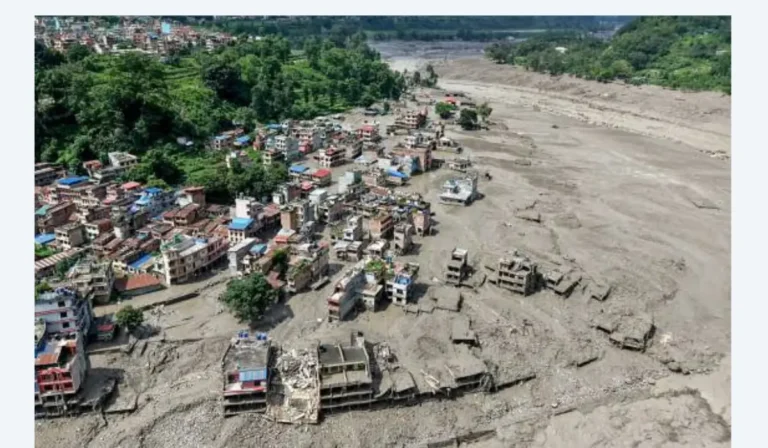
On the morning of 26 August 2026, a section of glacier collapsed near the Nepal–Tibet border, triggering a landslide large enough to register as a magnitude 5.2 seismic event on international monitoring networks. The resulting flash flood tore down the Lhende Khola into the Bhote Koshi and Trishuli river systems, with water levels in the Trishuli rising by as much as 9 metres in just 30 minutes.
The damage was concentrated in Nepal’s Rasuwa, Nuwakot, and Dhading districts, where entire settlements including Timure and Syafru Besi were swept away along with roads, bridges, and hydropower infrastructure. As rescue operations continued, officials confirmed more than 359 deaths in Nepal and 3 in China’s Gyirong County, with over 1,000 people — including hundreds of foreign tourists — still missing.
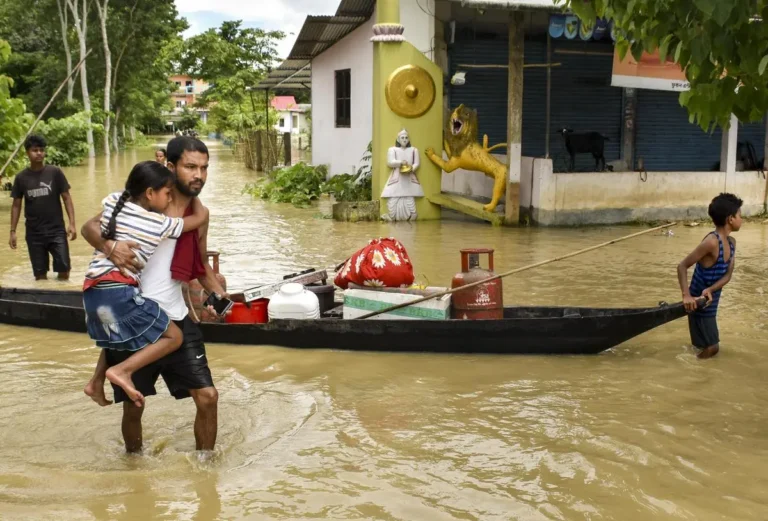
This wasn’t a one-off. Nepal experiences some version of this almost every monsoon season:
- 2024: Monsoon floods and landslides killed 132 people across the country.
- 2025: Landslides and floods in a single week left 60 people dead across 11 districts.
- 2021: A landslide-triggered flood on the Melamchi River damaged a major drinking-water project.
What’s different about the 2026 disaster is the scale and the cause. Climate scientists investigating the event point to a well-documented trend: the Himalayas are warming faster than the global average, glacial ice is melting at an accelerating rate, and previously stable mountainsides are becoming looser and more prone to sudden collapse. Researchers at Kathmandu’s International Centre for Integrated Mountain Development identified a glacial avalanche as the likely trigger — a mechanism that climate researchers have flagged as a growing risk across the region for years. You can read the complete blog on Nepal–Tibet Flood 2026.
Why the Himalayas Are Especially Vulnerable
A few factors make this region a hotspot for exactly this kind of disaster:
- Rapid glacial melt — warmer temperatures are destabilising ice masses that have sat largely intact for centuries.
- Steep, young mountain terrain — the Himalayas are geologically young and prone to landslides once ice or water loosens the rock.
- Dense river-valley settlements — many villages and hydropower projects sit directly in the path of glacial-lake and river systems, with little room to retreat.
- Limited early-warning infrastructure — glacial lake outburst floods (GLOFs) can develop and discharge within minutes, leaving very little time to issue alerts in remote terrain.
Spain’s Storms: A Season That Won’t Let Up
While Nepal deals with mountain floods, Spain has spent 2026 dealing with the opposite problem at a similar scale — repeated, back-to-back storm systems dumping months’ worth of rain in days.
Early in the year, storms named Kristin, Leonardo, and Marta swept across the Iberian Peninsula in quick succession. Storm Leonardo alone killed at least two people and forced more than 11,000 residents to evacuate, while Portugal reported damage exceeding €4 billion. Andalusia, particularly around Cádiz, saw more than 500 mm of rain in 24 hours in the mountainous Grazalema area — roughly what the region might expect across several months.
By February, meteorologists noted that seven high-impact storms had struck in a single month, refilling reservoirs by 4,500 cubic hectometres while simultaneously flooding towns and displacing thousands. Spain’s national weather agency placed much of Andalusia and the northwest under orange alerts as rivers like the Guadalquivir overflowed through cities including Córdoba.
This pattern didn’t start in 2026. It’s really an escalation of what Spain already experienced in October 2024, when the “DANA” storm system (a cut-off low-pressure system, known locally as a “cold drop”) brought over a year’s worth of rain to Valencia in a matter of hours. That event killed 237 people and caused roughly €10.7 billion in total damage — one of the deadliest natural disasters in modern Spanish history.
Why Is Spain Getting Hit So Often?
Meteorologists point to a combination of factors:
- Warmer seas fuel heavier rain. The Mediterranean and eastern Atlantic have been running warmer than average, and warmer water evaporates faster, loading storm systems with more moisture.
- A weakened Azores anticyclone. This high-pressure system normally acts as a shield, steering Atlantic storms north and away from Spain. A negative North Atlantic Oscillation phase has weakened that shield, letting more storms track directly across the peninsula.
- Saturated ground and swollen rivers. Once soil is already soaked from earlier storms, each new system has less capacity to absorb water — meaning increasingly severe runoff and flash flooding with less rainfall needed to trigger it.
- Urban development on floodplains. Much of the damage in Valencia (2024) and Andalusia (2026) has been worsened by construction on land that historically served as natural floodplain.
Why Extreme Weather Events Are Getting Worse Globally
Nepal and Spain are two visible examples of a global trend that climate scientists have been documenting for decades. According to the World Meteorological Organization’s State of the Global Climate report, 2015–2025 were the eleven hottest years on record, with 2025 sitting at roughly 1.43°C above pre-industrial levels. The ocean — which absorbs the vast majority of the planet’s excess heat — continues to warm, effectively loading the atmosphere with more energy and moisture to fuel extreme events.
The IPCC’s Sixth Assessment Report is direct about the mechanism: human-caused climate change has increased the frequency and intensity of heatwaves since the 1950s, and a warmer atmosphere holds more water vapour — meaning when it does rain, it rains harder. Scientists at World Weather Attribution, who run rapid studies after major disasters, have linked climate change to a growing list of 2026 events alone: record-shattering heat in western North America, destructive wildfires in France and Spain, and worsening flood risk across South and Southeast Asia.
In plain terms, three things are happening at once:
- More energy in the system — warmer oceans and air mean storms have more fuel to intensify quickly.
- More moisture in the atmosphere — for every 1°C of warming, the atmosphere can hold about 7% more water vapour, which translates directly into heavier rainfall.
- Faster ice and glacier loss — mountain and polar ice that once acted as a stable buffer is melting at a pace that’s outrunning natural adaptation, raising the risk of sudden-onset disasters like glacial lake outburst floods.
How These Disasters Are Being Controlled — and Where It’s Falling Short
Governments and international agencies aren’t standing still, but the honest picture is that adaptation is running behind the rate of change. Here’s what’s currently in place, and where the gaps remain.
What’s working:
- Early warning systems — Nepal and neighbouring Himalayan countries have expanded glacial lake monitoring and community alert networks, though coverage in remote valleys remains thin.
- Reservoir and dam management — in Spain, the storms that caused flooding also refilled reservoirs that had been running low after years of drought, showing that better water management can turn some of this rainfall into a long-term resource rather than pure disaster.
- International coordination — after the Nepal floods, the EU, UK, Australia, and other nations issued joint statements of support and mobilised humanitarian assistance.
- Stricter building codes in some flood-prone provinces — Spain has increasingly discussed restricting construction on historic floodplains, a lesson drawn directly from the 2024 Valencia disaster.
Where it’s falling short:
- Disaster response in Valencia in 2024 was widely criticised as too slow, and poor coordination between regional and national government worsened the death toll.
- Many at-risk Himalayan communities still lack real-time flood sensors upstream, meaning warnings often arrive minutes before disaster rather than hours.
- Reconstruction after each event tends to happen in the same vulnerable locations, resetting the risk for the next season.
What Happens If This Trend Continues
Climate scientists are fairly consistent on this point: without a substantial reduction in global greenhouse gas emissions, the frequency and severity of both flash floods and extreme storm seasons will keep climbing. A few likely trajectories:
- More frequent glacial lake outburst floods across the Himalayas, Andes, and other glaciated mountain ranges as ice continues retreating.
- Longer, more erratic storm seasons in the Mediterranean, with wetter winters interspersed with more intense droughts and wildfire risk in summer — a pattern already visible in Spain and France in 2026.
- Rising economic losses, disproportionately affecting countries with the least infrastructure to absorb the damage — Nepal being a clear example.
- Growing displacement pressure, as repeated flooding in the same regions pushes communities to relocate, straining resources elsewhere.
None of this is locked in as inevitable, though. The same climate models that project worsening extremes also show that emissions reductions, better land-use planning, and stronger early-warning infrastructure meaningfully reduce the human toll, even if the physical hazard itself doesn’t disappear overnight.
Ethiopia’s Volcano Eruption: How Ash Reached India
While floods dominated headlines in Nepal and Spain, a very different hazard made global news in late 2025: Ethiopia’s Hayli Gubbi volcano erupted for the first time in nearly 12,000 years, and its ash cloud travelled all the way to Indian airspace.
Hayli Gubbi sits in Ethiopia’s Afar region, part of the Erta Ale volcanic range, roughly 800 km northeast of Addis Ababa — an area where two tectonic plates meet, making it geologically active. The eruption began on 23 November 2025, sending a plume of ash, sulphur dioxide, and fine rock and glass particles up to roughly 14–15 km into the atmosphere.
High-altitude winds carried the ash plume west to east: across the Red Sea, over Yemen and Oman, across the Arabian Sea, and into western India. According to India’s Meteorological Department, the cloud entered Gujarat around 10 pm on 24 November 2025, then swept across Rajasthan, Delhi-NCR, Haryana, and Punjab before continuing toward the Himalayas and, eventually, China.
Impact on India:
- Skies over affected states appeared hazier and darker than usual.
- Aviation was hit hardest — IndiGo, Akasa Air, Air India, and other carriers cancelled or delayed flights as a precaution, since volcanic ash can damage jet engines.
- India’s aviation regulator, the DGCA, issued advisories directing airlines to avoid ash-affected corridors.
- The IMD confirmed the ash cloud cleared Indian skies by around 7:30 pm on 25 November as it drifted onward toward China.
No injuries were reported in India, and the health and air-quality impact was described as minimal — the main disruption was to air travel. In Ethiopia itself, no casualties were reported either, though the ash covered nearby villages and threatened grazing land for local livestock herders.
Why this matters alongside the floods: it’s a reminder that a warming, more volatile planet isn’t just about rainfall and storms. Geological and weather hazards increasingly compound each other’s disruption — flights get grounded, supply chains stall, and emergency-response systems already stretched thin by flood recovery have to also handle an unrelated hazard arriving from thousands of kilometres away.
Frequently Asked Questions
Q: What caused the 2026 Nepal floods?
A glacier collapse near the Nepal–Tibet border triggered a landslide and a massive flash flood down the Trishuli and Bhote Koshi river systems on 26 August 2026, killing over 350 people.Q: Is climate change responsible for Nepal’s floods?
Scientists say climate change is very likely a major contributing factor, since rising temperatures are accelerating glacial melt and destabilising mountain terrain across the Himalayas.Q: Why has Spain had so many storms in 2026?
A combination of warmer sea surface temperatures and a weakened Azores anticyclone (tied to a negative North Atlantic Oscillation phase) has allowed more Atlantic storm systems to track directly across the Iberian Peninsula.Q: Did the Ethiopia volcano ash cloud affect India’s air quality long-term?
No. The ash cloud passed over parts of western and northern India within about a day and moved on toward China, with the main impact being flight delays and cancellations rather than lasting air-quality effects.Q: Can these disasters be prevented in the future?
The underlying hazards (glacial melt, intense storms, volcanic activity) can’t be prevented, but their human toll can be significantly reduced through early warning systems, stricter floodplain construction rules, and faster disaster response coordination.
Final Thoughts
Nepal’s floods and Spain’s storms look like separate stories on the surface, but they’re both symptoms of the same underlying shift: a warmer planet is making extreme weather more frequent, more intense, and harder to predict. The Ethiopian volcano eruption is a separate hazard entirely, but it landed in the same news cycle for a reason — the world’s systems, from aviation to emergency response, are being tested from multiple directions at once.
The science is clear that the physical risk will keep growing without serious emissions reductions. What’s less fixed is how much damage that risk actually causes — and that part depends on decisions being made right now, from glacial lake monitoring in the Himalayas to flood-zone building codes in Spain.