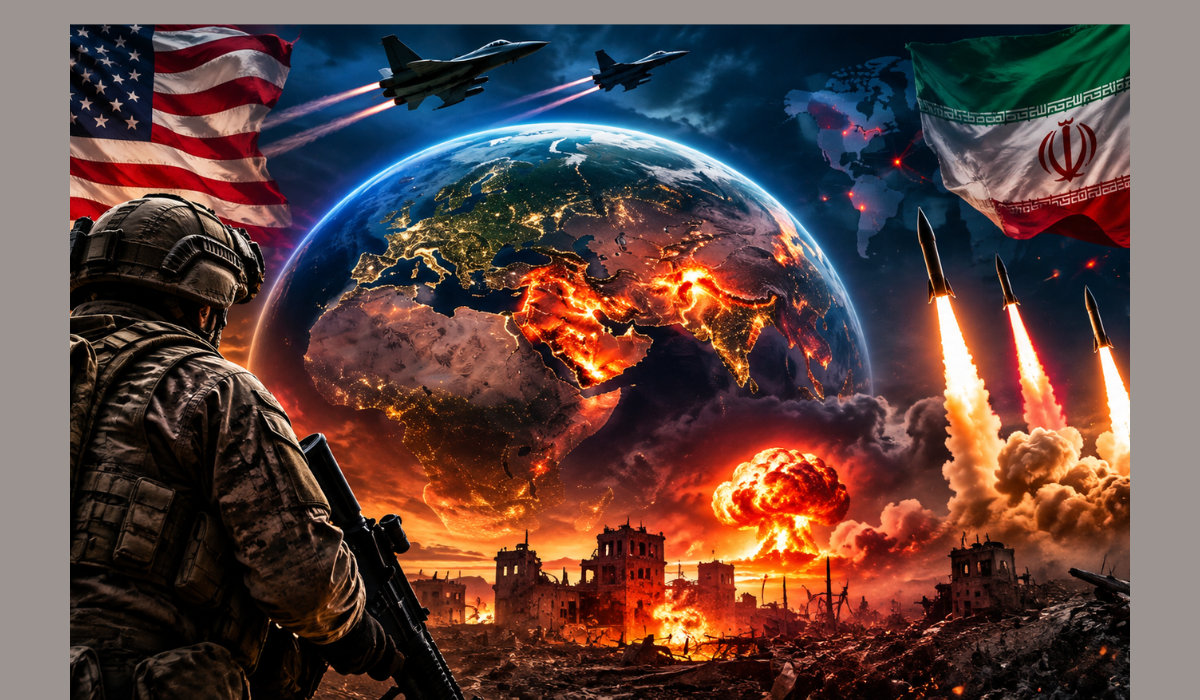
Are We Heading Toward World War 3? 7 Warning Signs Behind Today’s Global Conflicts
Type “is world war 3” into any search bar and autocomplete finishes the sentence for you before you’re done typing. That alone tells you something — a lot of people are quietly worried, and headlines aren’t making it easier to tell real danger from doomscrolling.
So let’s actually look at it properly. Not with vague dread, and not with a hot take designed to go viral — with the real, documented state of global conflict right now, in August 2026, and what genuine conflict analysts (not commentators) say about it.
The honest answer up front: there is no declared World War 3, and most serious analysts don’t think that specific label fits what’s happening. But there are real, measurable warning signs worth understanding — because ignoring them isn’t the same as staying calm about them. Here are seven, explained with the actual facts behind each one.
Quick Answer
No, a “World War 3” has not been declared, and most conflict analysts caution against that specific framing. However, 2026 is seeing an unusually high number of simultaneous, serious conflicts: an active war between the United States/Israel and Iran (ongoing since February 2026, with Iran’s Supreme Leader killed in the opening strikes), the fourth year of the Russia-Ukraine war, escalating grey-zone tension between China and Taiwan, the U.S. capture of Venezuela’s president amid a major military buildup, and hybrid attacks (drone incursions, sabotage) between Russia and NATO states. Experts like Professor Neophytos Loizides of the University of Warwick describe the danger less as a single trigger point and more as “simultaneous global shocks” that governments are increasingly struggling to manage — a real and serious situation, but a different one than a single all-encompassing world war.
Table of Contents
- Why This Question Is Even Being Asked Right Now
- Warning Sign 1: An Active War Between the US/Israel and Iran
- Warning Sign 2: The Russia-Ukraine War Is Still Grinding On, Year Four
- Warning Sign 3: NATO-Russia “Hybrid” Incidents Are Increasing
- Warning Sign 4: The Taiwan-China Standoff Keeps Intensifying
- Warning Sign 5: The US Captured a Sitting Foreign Head of State
- Warning Sign 6: Nuclear Arsenals and Ambitions Are Expanding, Not Shrinking
- Warning Sign 7: More Conflicts Are Happening at Once Than in Decades
- Why Most Experts Say “World War 3” Isn’t the Right Framing
- What Actually Would Need to Happen for a World War
- How to Follow This Responsibly Without Doomscrolling
- Myths vs Facts
- Key Takeaways
- Frequently Asked Questions
Why This Question Is Even Being Asked Right Now
This isn’t a question people are asking out of nowhere. Several things converged at once in 2025 and 2026 that hadn’t happened together in decades: a direct war between a nuclear-armed power and a nuclear-aspirant state, a grinding land war in Europe entering its fourth year, an unprecedented U.S. military capture of a foreign head of state, and rising incidents between Russia and NATO members that fall just short of open conflict.
The Council on Foreign Relations’ 2026 Preventive Priorities Survey — an annual assessment compiled from over 600 American foreign policy experts — flagged five conflict-related scenarios as both highly likely and high-impact for 2026, a notably crowded list compared to prior years.
That’s the honest backdrop. Now let’s go through what’s actually happening, one conflict at a time.
Warning Sign 1: An Active War Between the US/Israel and Iran
This is the single biggest, most under-discussed development driving “World War 3” search traffic right now — an actual, ongoing war most casual news readers haven’t fully clocked.
On February 28, 2026, the United States and Israel launched coordinated air and missile strikes on Iran, explicitly aiming to degrade Iran’s nuclear and ballistic missile programs and, according to reporting, to induce regime change. Iran’s Supreme Leader, Ali Khamenei, was killed in the opening strikes. Iran retaliated by striking U.S. bases across the region, targets in Israel, and closing the Strait of Hormuz — a chokepoint carrying roughly 20% of the world’s oil supply. Iran-backed Hezbollah launched attacks on Israel from Lebanon, prompting Israeli ground operations there.
A ceasefire was reached on April 7–8, 2026, mediated by Pakistan — but according to Task & Purpose’s ongoing conflict timeline, the fighting has “seesawed between open conflict and temporary lulls” ever since, with strikes continuing intermittently even after the ceasefire and a June 2026 memorandum of understanding. As of the most recent reporting, 18 American service members have died in the conflict. A separate U.S. strike on Iranian sites occurred as recently as May 7, 2026, in response to Iranian targeting of U.S. warships.
Why this matters for the broader “warning sign” conversation: this is not grey-zone tension or a proxy conflict. It’s direct, state-on-state warfare involving a major power, with a foreign head of state killed and American troops actively dying in ongoing operations — the most serious single conflict on this entire list.
Warning Sign 2: The Russia-Ukraine War Is Still Grinding On, Year Four
Ukraine’s Zelensky has publicly and repeatedly warned that the war with Russia could escalate into a broader global conflict. Whatever you make of that specific warning, the underlying war itself remains very real, and recent data shows it intensifying rather than winding down.
According to Russia Matters’ latest War Report Card (August 12, 2026), Russian forces made a net gain of 33 square miles of Ukrainian territory in the four weeks from mid-July to mid-August 2026 — more than double the 15 square miles gained in the prior four-week period. Casualty estimates from a highly-informed former Western official cited by Russia Matters put Russian military casualties (killed and wounded) at roughly 1,000,000, and Ukrainian military casualties at 250,000–300,000, as of a February 2026 estimate.
The war has also expanded well beyond the front lines. As of this week, Ukraine has conducted long-range strikes on Russia’s Black Sea Fleet at Novorossiysk, and Zelensky has claimed Russia is receiving additional ballistic weapons and troop support from North Korea — a claim that, if accurate, further internationalizes what began as a bilateral war.
Why this matters: this remains, in the words of multiple conflict trackers, the deadliest conflict in Europe since World War II — and it’s still active, still escalating in specific ways, and still drawing in outside actors, even four years in.
Warning Sign 3: NATO-Russia “Hybrid” Incidents Are Increasing
Separate from the battlefield in Ukraine, a different kind of tension has been building directly between Russia and NATO member states — what analysts term “hybrid” escalation.
Late 2025 and early 2026 saw a documented pattern of Russian drones probing NATO air defenses, alongside sabotage incidents in Europe that U.S. intelligence officials have attributed to Russia, prompting direct warnings to American defense companies to increase security precautions. Geopolitical analyst commentary from World Geostrategic Insights specifically flags this as concerning precisely because it’s persistent and “unlikely to end well” if left unaddressed — not because any single incident is catastrophic on its own.
Why this matters: unlike a formal war, hybrid incidents are deliberately ambiguous — hard to attribute definitively, hard to respond to without escalating, and hard to simply ignore. That ambiguity is exactly what makes analysts nervous, since it creates space for miscalculation without a clear, singular triggering event.
Warning Sign 4: The Taiwan-China Standoff Keeps Intensifying
Taiwan remains, in the words of the Council on Foreign Relations’ Global Conflict Tracker, “one of the most sensitive geopolitical flashpoints” going into and through 2026.
The core dynamic: China’s continued claim to sovereignty over Taiwan, paired with President Xi Jinping’s stated goal of “reunification” by 2049, has driven a sustained campaign of what analysts call “grey zone” pressure — military aircraft incursions into Taiwan’s air defense identification zone, expanding coast guard operations, and, as of August 2026, PLA missile tests signaling an enhanced nuclear second-strike capability.
Recent developments add real weight to the concern:
- China is expanding its nuclear submarine fleet. A U.S. Office of Naval Intelligence commander testified to the Senate that China could field 20–30 missile-armed nuclear submarines by 2040, up from roughly 12 today.
- China and Russia have conducted joint strategic aerial patrols near South Korea and Japan, entering South Korea’s air defense identification zone — exercises that may also improve interoperability that could complicate any future Japanese involvement in defending Taiwan.
- Taiwan itself is responding with a major buildup. Its legislature passed a bill allowing $25 billion in additional defense spending between 2026 and 2033, and the island has extended compulsory military service, citing threats from China directly.
- China has separately been documented supplying air defense equipment to Iran, according to Reuters sourcing — illustrating how these regional flashpoints aren’t fully separate from each other.
Why this matters: unlike Ukraine or Iran, a Taiwan conflict would directly involve the world’s two largest economies and would, per multiple analysts, severely disrupt global semiconductor supply chains — giving it outsized economic consequences well beyond the immediate region.
Also read our complete blog on Punjab Protest 2026
Warning Sign 5: The US Captured a Sitting Foreign Head of State
This is a genuinely unprecedented event that deserves to be understood on its own terms, separate from the broader Venezuela tension it capped off.
Throughout the final months of 2025, U.S. military assets built up substantially in the Caribbean, framed publicly as an anti-drug-trafficking operation, while U.S. forces carried out repeated strikes on boats it alleged were smuggling narcotics. Venezuela’s Maduro responded by mobilizing hundreds of thousands of troops and militia members to what he called “battlefront” locations.
On January 3, 2026, U.S. special forces launched a military operation in Caracas, striking multiple locations across the capital and several Venezuelan states, and captured President Nicolás Maduro and his wife directly from their residence. Maduro was flown to New York the same day and remains in custody awaiting trial on narcoterrorism-related charges. UN Secretary-General António Guterres described the operation as setting “a dangerous precedent,” and the UN’s independent fact-finding mission on Venezuela raised separate concerns about accountability for alleged human rights violations amid the unfolding crisis.
Why this matters: regardless of how one views the legal or moral justification, the capture of a sitting head of state via direct military action is a significant departure from established international norms — and one that regional and international bodies have flagged specifically because of the precedent it sets for how major powers might resolve future disputes with smaller states.
Warning Sign 6: Nuclear Arsenals and Ambitions Are Expanding, Not Shrinking
A recurring thread across nearly every conflict above is nuclear weapons — not necessarily their use, but their expanding role in deterrence calculations:
- China is actively growing its nuclear submarine fleet and testing missiles that signal an improved second-strike capability.
- Iran’s nuclear program remains a central, unresolved dispute at the heart of its ongoing war with the U.S. and Israel — the stated original justification for the February 2026 strikes.
- North Korea remains a flagged risk for 2026, with the Council on Foreign Relations specifically noting that a resumption of North Korean nuclear weapons testing could trigger armed confrontation involving regional powers and the United States.
- Russia has continued invoking its nuclear posture rhetorically throughout the Ukraine war, part of the broader “hybrid” pressure campaign against NATO states.
Why this matters: none of this means nuclear weapons are about to be used — that remains, by all serious assessments, a low-probability outcome. But an environment where multiple major and aspiring powers are simultaneously expanding nuclear capabilities, rather than reducing them, is a genuinely different backdrop than the arms-reduction trend that characterized most of the post-Cold War period.
Warning Sign 7: More Conflicts Are Happening at Once Than in Decades
Perhaps the most important warning sign isn’t any single conflict — it’s the sheer number happening simultaneously.
According to ACLED’s Conflict Watchlist for 2026, ten distinct countries and regions are projected to face significant armed conflict, political unrest, or humanitarian emergency this year. Beyond the conflicts already covered above, this includes:
- Sudan’s civil war, now in a state analysts describe as stuck, with the army rejecting ceasefire proposals and fighting continuing in Kordofan
- Eastern DRC, where the M23 rebel group continues expanding territorial control despite an existing peace framework
- Ethiopia, with renewed fighting between federal forces and regional militias in Amhara and Oromia
- Syria, where a resurgent civil war has been added to CFR’s 2026 concern list following a year of political upheaval
- South Sudan, where repeated election delays risk triggering renewed factional fighting
- Haiti, where armed groups continue clashing with security forces amid political dysfunction
Professor Neophytos Loizides of the University of Warwick’s Department of International Conflict Analysis put it directly to Anadolu Agency: “In the next few years, we will see more conflict now than at any other time in the next few decades.” Critically, he framed the risk not as coming from any single region, but from “simultaneous global shocks” that governments appear increasingly unable to manage together.
Why this matters: a world war, historically, hasn’t required every conflict to be connected by a single cause — it’s required a critical mass of simultaneous instability, strained alliances, and miscalculation risk. Whether or not that specific outcome follows, the sheer concurrent volume of serious conflict is, by expert consensus, unusually high right now.
Why Most Experts Say “World War 3” Isn’t the Right Framing
Here’s the important counterbalance, and it deserves equal weight: despite everything above, the dominant view among serious conflict analysts is that “World War 3” is the wrong lens for understanding this moment — not because the conflicts aren’t real, but because the framing itself is misleading in a specific way.
- No formal alliance-wide declaration exists. Unlike World War I or II, none of today’s conflicts have triggered a cascading, treaty-bound chain of declarations pulling entire alliance blocs into direct combat with each other simultaneously.
- NATO’s Article 5 has not been invoked, despite the hybrid incidents with Russia — a meaningful threshold that, if crossed, would represent a genuinely different level of escalation.
- Analysts frame this as “harder to manage” conflicts, not necessarily “more connected” ones. The World Geostrategic Insights analysis specifically notes: “We are not necessarily facing more conflicts, but conflicts that are harder to manage, harder to mediate, and more prone to escalation.” That’s a meaningfully different claim than “these conflicts are merging into one.”
- Public fear has outpaced formal risk assessments before. A previous DailyMail.com poll found nearly four in ten Americans believed the country was inching closer to global conflict — a sentiment tracked repeatedly over the years without a world war actually materializing, suggesting public anxiety and formal escalation risk don’t move in perfect lockstep.
The most accurate summary, drawing on the analysts cited throughout this piece: the world is more volatile and more simultaneously strained than it’s been in decades, but “volatile and strained” is a distinct, more precise description than “on the verge of World War 3” — and conflating the two tends to generate anxiety without adding real understanding.
What Actually Would Need to Happen for a World War
To make this concrete rather than abstract, here’s what historically distinguishes a world war from a period of high global conflict, based on how the two prior world wars actually unfolded:
- Formal alliance-triggered mutual defense declarations — not just tension between blocs, but treaty obligations activating simultaneously across multiple major powers.
- Direct combat between multiple great powers on multiple fronts at once — not proxy involvement or arms supply, but direct military engagement.
- A collapse of the diplomatic mechanisms designed to prevent escalation — including the United Nations Security Council becoming functionally unable to mediate between major powers, not just gridlocked on individual votes.
- Global economic mobilization for war — a shift from targeted sanctions and regional military spending to broad, wartime-footing economic reorganization across multiple major economies simultaneously.
As of August 2026, none of these four thresholds have been crossed, even accounting for the serious individual conflicts covered above. That’s not a guarantee about the future — it’s simply where the verified, current facts actually place us.
How to Follow This Responsibly Without Doomscrolling
If this topic genuinely worries you, a few practical habits help separate real signal from anxiety-inducing noise:
- Follow primary conflict trackers, not just headlines — sources like the Council on Foreign Relations’ Global Conflict Tracker, ACLED, and the Institute for the Study of War publish regularly updated, source-cited assessments rather than reactive commentary.
- Distinguish between “escalation risk” and “escalation happening.” Analysts flagging a scenario as plausible for a watchlist is different from confirming it’s underway.
- Notice when a claim lacks a named source or verifiable event. Much of the most alarming “WW3 is imminent” content online cites vague momentum rather than a specific, checkable development.
- Set boundaries on consumption if it’s affecting your wellbeing. Staying broadly informed doesn’t require hourly updates; a daily or weekly check-in from a reliable source is enough to stay genuinely informed without the anxiety spiral that constant exposure can create.
Myths vs Facts
| Myth | Fact |
|---|---|
| World War 3 has effectively already started | No formal, alliance-wide declaration or mutual-defense cascade has occurred; individual serious conflicts remain geographically and structurally distinct |
| The Iran war is a minor, contained skirmish | It’s a direct war involving the U.S. and Israel against Iran, including the killing of Iran’s Supreme Leader and 18 American service member deaths as of the latest count |
| The Russia-Ukraine war has stabilized or slowed down | Recent data shows Russian territorial gains actually accelerating in the most recent reporting period compared to the prior month |
| Taiwan-China tension is purely rhetorical | It includes live-fire drills, extended Taiwan conscription, a $25 billion Taiwanese defense package, and expanding Chinese nuclear submarine capability |
| Nothing this serious has happened with Venezuela | The U.S. captured a sitting head of state via direct military operation in January 2026 — an unprecedented action flagged by the UN as setting a “dangerous precedent” |
| Public anxiety about world war always signals real, imminent risk | Public fear has spiked in past years without materializing into world war, showing anxiety and formal risk assessments don’t always move together |
Key Takeaways
- No World War 3 has been declared, and most serious conflict analysts caution against that specific framing, even while acknowledging genuine, elevated risk.
- The United States and Israel have been in an active, ongoing war with Iran since February 28, 2026, including the killing of Iran’s Supreme Leader and continued intermittent strikes despite a ceasefire.
- The Russia-Ukraine war, now in its fourth year, saw accelerating Russian territorial gains in the most recent reporting period.
- Hybrid incidents — drone incursions, sabotage — between Russia and NATO states are increasing, without crossing the Article 5 threshold.
- Taiwan-China tensions include expanding Chinese nuclear submarine capability, joint China-Russia military exercises, and a major Taiwanese defense buildup.
- The U.S. capture of Venezuela’s Maduro in January 2026 marked an unprecedented use of direct military force against a sitting foreign head of state.
- Ten separate countries/regions are on ACLED’s 2026 conflict watchlist, reflecting an unusually high number of simultaneous serious conflicts — the real, defining feature of this moment, according to conflict researchers.
- The clearest, most responsible read of the evidence: this is a genuinely volatile, historically unusual period — but a distinct situation from a declared or inevitable world war.
Frequently Asked Questions
1. Is World War 3 actually happening right now? No formal World War 3 has been declared. However, 2026 features an unusually high number of simultaneous serious conflicts, including an active US/Israel-Iran war, the ongoing Russia-Ukraine war, and rising Taiwan-China and Russia-NATO tensions. Most conflict analysts describe this as elevated global instability rather than a world war.
2. What is the current status of the US-Iran war? The war began on February 28, 2026, and reached a ceasefire on April 7–8, 2026, followed by a June 2026 memorandum of understanding. However, strikes have continued intermittently since then, and as of the latest reporting, 18 American service members have died in the conflict.
3. Is the Russia-Ukraine war getting worse or better? Recent data from Russia Matters shows Russian forces made greater territorial gains in the four weeks ending August 11, 2026, compared to the previous four-week period, suggesting the conflict is intensifying rather than winding down.
4. Could a war over Taiwan really happen? Analysts describe rising risk through expanding Chinese military capability, joint China-Russia exercises, and Taiwan’s own defense buildup, but no direct armed conflict has occurred. It remains a closely watched flashpoint rather than an active war.
5. What happened with the US and Venezuela? In January 2026, U.S. special forces captured Venezuelan President Nicolás Maduro during a military operation in Caracas. He remains in U.S. custody facing narcoterrorism-related charges. The UN has described the operation as setting a “dangerous precedent.”
6. Are nuclear weapons actually at risk of being used? There is no credible indication that nuclear weapon use is imminent in any current conflict. However, several major and aspiring nuclear powers, including China and North Korea, are expanding nuclear capabilities, which analysts flag as a concerning long-term trend rather than an immediate threat.
7. Why do so many experts disagree on how serious this is? Experts generally agree the current level of simultaneous global conflict is historically unusual. Where they differ is on framing — some emphasize the genuine danger of “simultaneous global shocks,” while others caution that calling it “World War 3” overstates the level of formal, interconnected escalation actually taking place.
8. How many active conflicts are happening in the world right now? Conflict trackers like ACLED’s 2026 Watchlist identify roughly ten countries or regions facing significant armed conflict or serious political unrest, including Sudan, the DRC, Ethiopia, Syria, South Sudan, and Haiti, alongside the larger conflicts covered in this article.
9. What would actually need to happen for this to become a world war? Historically, a world war has required formal alliance-triggered mutual defense declarations, direct combat between multiple great powers on multiple fronts, a collapse of diplomatic mediation mechanisms like the UN Security Council, and broad wartime economic mobilization across major economies. None of these thresholds have currently been crossed.
10. Is it normal to feel anxious about all of this? Yes, and it’s a reasonable reaction to genuinely serious global events. If following this news is affecting your wellbeing, it can help to rely on a small number of credible, regularly updated sources rather than constant headline exposure, and to distinguish clearly between “risk being monitored” and “event actually occurring.”
Conclusion
The honest, fact-based answer to “are we heading toward World War 3” is genuinely more useful than either extreme you’ll find online. This isn’t manufactured panic — an actual war between the U.S., Israel, and Iran has been running since February 2026, Ukraine is still losing ground four years in, and a head of state was captured by military force for the first time in modern memory. Those are real, serious, verifiable facts, not speculation.
But it’s also not the coordinated, alliance-cascading global war the term “World War 3” specifically describes historically. What’s actually happening is something conflict researchers are still working to name precisely — an unusually high number of serious, simultaneous conflicts that are individually contained but collectively straining the diplomatic and military systems built to manage them.
Understanding that distinction won’t make any of these conflicts less serious for the people living through them. But it will help you read the next alarming headline with the context to know whether it’s describing a genuine escalation, or just another data point in an already volatile year.