Why Everyone’s Switching to These 7 Affordable Flooring Trends
Here’s something interesting happening in home renovation right now: people aren’t choosing cheaper flooring because they have to. They’re choosing it because it’s actually better.
For a long time, “affordable” and “budget” flooring meant a visible compromise — floors that looked fine in photos but felt thin, scratched easily, or screamed “rental unit” the moment you walked in. That’s changed. Materials like luxury vinyl plank and modern laminate have improved so much that most people genuinely can’t tell them apart from real hardwood or stone without touching them.
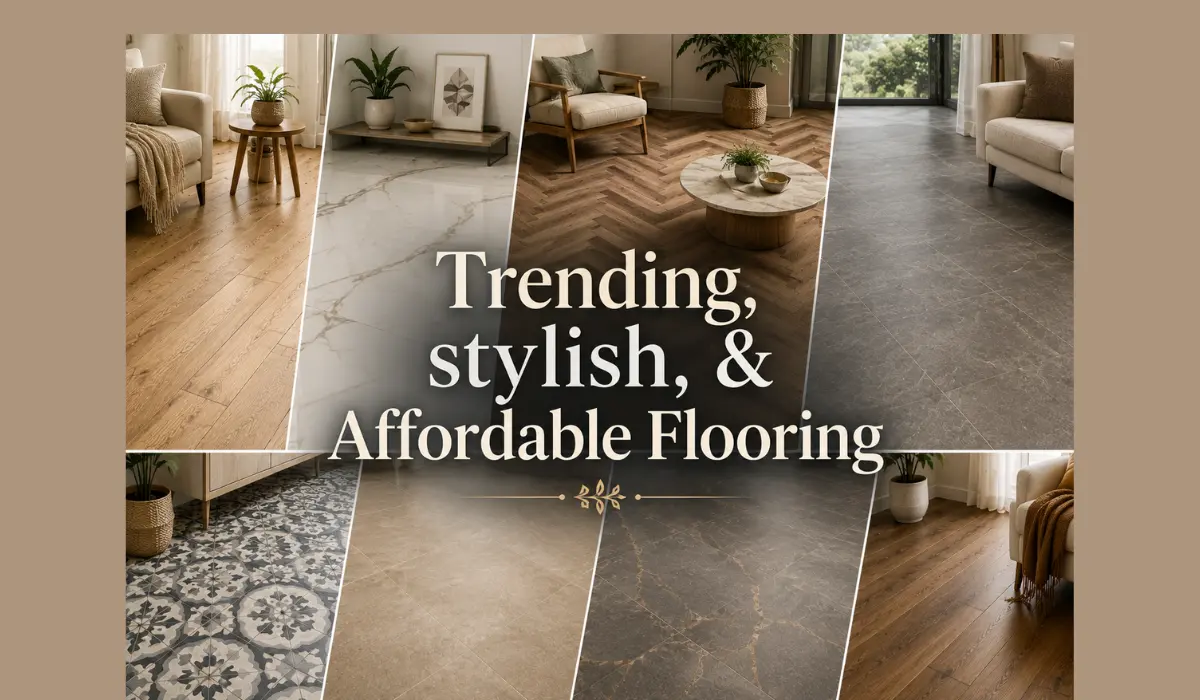
This shift is showing up everywhere in 2026 — in showrooms, in renovation shows, and in what flooring companies say homeowners are actually asking for. Here are the seven trends driving that switch, what each one actually costs, and how to pick the right one for your space.
Quick Answer
Homeowners are switching to affordable flooring in 2026 because materials like luxury vinyl plank (LVP), modern laminate, and stone-look vinyl tile now closely replicate the look of real hardwood and natural stone at a fraction of the cost, while offering better water resistance and durability than older budget options ever did. The seven biggest trends right now are: waterproof LVP, next-generation laminate, stone-look vinyl replacing dated tile patterns, wide-plank and large-format styles, warm wood tones replacing cool grays, sustainable materials like cork and bamboo, and patterned or herringbone layouts used as accents.
Table of Contents
- Why Affordable Flooring Is Having a Real Moment
- Trend 1: Waterproof Luxury Vinyl Plank (LVP)
- Trend 2: Laminate Flooring’s Comeback
- Trend 3: Stone-Look Vinyl Replacing Dated Tile Prints
- Trend 4: Wide-Plank and Large-Format Styles
- Trend 5: Warm Wood Tones Replacing Cool Grays
- Trend 6: Budget-Friendly Sustainable Materials
- Trend 7: Patterned and Herringbone Accents
- Cost Comparison Table
- How to Choose the Right One for Your Space
- Common Mistakes to Avoid
- Myths vs Facts
- Key Takeaways
- Frequently Asked Questions
Why Affordable Flooring Is Having a Real Moment
Three things changed at the same time, and together they explain this whole shift.
First, the technology genuinely got better. Older vinyl and laminate had an obvious “fake” look — glossy surfaces, repeating patterns, and a hollow sound underfoot. Modern versions use deeper embossing, matte finishes, and randomized plank patterns that mimic real wood grain far more convincingly.
Second, priorities changed. Homeowners today rank ease of maintenance and cost above almost everything else when choosing flooring, according to recent industry surveys. That’s a shift from a decade ago, when “authentic material” was the dominant deciding factor regardless of price.
Third, supply issues in other materials pushed people to look again at options they’d dismissed. When certain vinyl products faced pricing and supply pressure recently, laminate manufacturers used the opening to release better products, and homeowners who tried them were surprised by how far the category had come.
Put simply: this isn’t a trend built on people settling. It’s a trend built on people realizing the “budget” category quietly stopped being a downgrade.
Trend 1: Waterproof Luxury Vinyl Plank (LVP)
What it is: Multi-layer vinyl flooring designed to mimic hardwood or stone, built with a fully waterproof core.
LVP remains the single most popular affordable flooring choice going into 2026, and for a specific reason: it’s the only budget material that’s genuinely 100% waterproof, not just water-resistant. That makes it the default choice for kitchens, bathrooms, mudrooms, and basements — rooms where real hardwood is a genuinely bad idea regardless of budget.
The 2026 update to this trend is in the details: wider and longer planks, more realistic wood and stone visuals, and matte, low-sheen finishes that avoid the “shiny plastic” look older vinyl was known for.
Why people are switching: it survives kids, pets, spills, and humidity without the warping risk that real wood carries — while still delivering a high-end look in photos and in person.
Best for: Kitchens, bathrooms, basements, mudrooms, rental properties, and any home with pets.
Trend 2: Laminate Flooring’s Comeback
What it is: A layered synthetic flooring with a high-resolution photographic image layer topped by a protective wear layer.
Laminate had a rough reputation for years — thin planks, a fake shine, and poor water resistance were common complaints. That’s changing fast. Industry professionals are specifically pointing to laminate as one of the biggest comeback stories heading into 2026, driven by wider and longer planks, meaningfully better moisture protection, and finishes that look far more realistic than older versions.
Part of this comeback is also circumstantial: as some vinyl flooring products have faced market pressures, more homeowners have gone back to compare laminate directly — and been surprised by how much the category has improved.
Why people are switching: it typically costs less than LVP while offering a firmer, more “hardwood-like” underfoot feel that some homeowners prefer.
Best for: Living rooms, bedrooms, and hallways — areas with moderate rather than heavy moisture exposure.
Trend 3: Stone-Look Vinyl Replacing Dated Tile Prints
What it is: Vinyl flooring styled to resemble natural stone — think limestone, travertine, terrazzo, or concrete — instead of older glossy tile-pattern prints.
This is a genuinely interesting shift. For years, budget vinyl leaned on prints that mimicked retro tile patterns. In 2026, that’s being replaced by vinyl with a natural stone-like texture and appearance, driven by a broader design move toward earthy, organic materials over anything that reads as obviously synthetic.
Designers are specifically calling out natural, neutral stones and organic materials — limestone, travertine, tadelakt, zellige-style patterns — as the look people want, and vinyl manufacturers have gotten remarkably good at replicating that appearance at a fraction of real stone’s cost.
Why people are switching: you get the timeless, high-end stone look without the cost, weight, or installation complexity of actual stone tile — and without the dated feel of older glossy vinyl.
Pro tip: avoid hyper-glossy stone-look vinyl. A lightly textured, matte finish reads as far more convincing and current than a shiny surface.
Best for: Entryways, kitchens, bathrooms, and open-concept living spaces going for a Mediterranean or organic-modern look.
Trend 4: Wide-Plank and Large-Format Styles
What it is: Hardwood-look planks and porcelain tiles manufactured in larger sizes than the traditional narrow-strip or small-tile formats.
Clean lines and uninterrupted flow are shaping home design broadly in 2026, and flooring is following that lead. Wider planks and larger tiles mean fewer seams and grout lines across a room, which creates a visually calmer, more open look — especially valuable in smaller homes where every visual break can make a space feel more cluttered or chopped-up.
This works particularly well in open-concept layouts, where wide planks visually stretch a room and large-format tile in kitchens and bathrooms minimizes grout lines while keeping a sleek, easy-to-clean finish.
Why people are switching: it’s a low-cost way (the material itself isn’t more expensive, just differently sized) to make an entire home feel bigger and more cohesive.
Best for: Open-concept homes, main living levels, and multi-story homes where visual continuity matters.
Trend 5: Warm Wood Tones Replacing Cool Grays
What it is: A color shift away from the cool gray tones that dominated flooring for roughly a decade, toward honey oak, chestnut, and other warm, natural wood hues.
After years of cool gray being the safe, default choice, 2026 is seeing a clear pivot toward golden honey hues, rich chestnuts, and natural oak tones that bring organic warmth back into modern interiors. This ties directly into broader color trends — warm neutrals are showing up in paint colors, cabinetry, and countertops at the same time, creating a cohesive “toasty palette” look across a whole home.
Why people are switching: gray flooring, while still common, is starting to feel like a design era rather than a timeless choice — and warm tones photograph better in natural light while making rooms feel more inviting rather than clinical.
Best for: Anyone renovating now who wants their floors to feel current for longer, rather than dated again in five years.
Trend 6: Budget-Friendly Sustainable Materials
What it is: Flooring made from renewable or recycled materials — cork, bamboo, reclaimed wood looks (often in LVP form), and recycled-content carpet fibers.
Sustainability has moved from a niche preference to a mainstream expectation in flooring choices for 2026. What makes this trend genuinely “affordable,” and not just a premium eco-upsell, is that manufacturers are now offering reclaimed-wood aesthetics through LVP — giving you the one-of-a-kind, characterful look of reclaimed hardwood without the reclaimed-hardwood price tag.
Cork in particular is gaining ground for bedrooms specifically because it adds natural warmth and sound absorption, while low-VOC carpet options are increasingly chosen for kids’ rooms to support better indoor air quality.
Why people are switching: it lets budget-conscious renovators align with sustainability goals without paying a premium most eco-flooring used to demand.
Best for: Bedrooms (cork), living rooms (reclaimed-look LVP), kids’ rooms (low-VOC recycled-fiber carpet).
Trend 7: Patterned and Herringbone Accents
What it is: Using patterned tile or herringbone-laid planks — including affordable LVP — as an accent in specific rooms rather than throughout an entire home.
This is arguably the smartest trend on this list for anyone on a tight budget. Instead of committing to a bold, high-maintenance pattern across an entire floor plan, homeowners are using it strategically: a patterned tile entryway, or a herringbone layout in the kitchen, as a focal point. Even LVP can be installed in a herringbone pattern, delivering a striking, elevated look while keeping the durability and affordability that made vinyl popular in the first place.
Why people are switching: it gives a space real personality and a “designed” feeling without the cost or risk of committing bold patterns to every room in the house.
Best for: Entryways, kitchens, and small statement areas — not recommended for full open-concept flooring unless budget genuinely allows it.
Cost Comparison Table
| Flooring Type | Typical Cost Range (per sq. ft., material only) | Water Resistance | Best Rooms | Lifespan |
|---|---|---|---|---|
| Luxury Vinyl Plank (LVP) | $2–$7 | Fully waterproof | Kitchens, bathrooms, basements | 15–25 years |
| Modern Laminate | $1–$5 | Water-resistant (not fully waterproof) | Living rooms, bedrooms, hallways | 15–25 years |
| Stone-Look Vinyl Tile | $2–$6 | Fully waterproof | Entryways, kitchens, bathrooms | 15–25 years |
| Reclaimed-Look LVP | $3–$7 | Fully waterproof | Living rooms, feature walls/floors | 15–25 years |
| Cork Flooring | $3–$8 | Water-resistant (needs sealing) | Bedrooms | 10–20 years |
| Recycled-Fiber Carpet | $2–$6 | Not water-resistant | Bedrooms, kids’ rooms | 8–15 years |
| Real Hardwood (for comparison) | $6–$14+ | Not water-resistant | Living rooms, dining rooms | 30–100 years (with refinishing) |
Note: these are general material cost ranges based on current industry reporting, not fixed quotes — actual pricing varies by brand, region, and installation complexity. Always get a local quote before budgeting.
How to Choose the Right One for Your Space
Use this simple decision path:
- Is the room exposed to water or heavy moisture (kitchen, bathroom, basement, mudroom)? → Choose LVP or stone-look vinyl. Skip laminate and cork here.
- Do you want a warmer, more natural wood look without replacing floors again in 5 years? → Choose warm-toned laminate or wide-plank LVP in honey oak or chestnut tones.
- Is sustainability a genuine priority, and is the room a bedroom or low-traffic space? → Cork or recycled-fiber carpet are strong, budget-friendly options.
- Do you want a design statement without a huge budget? → Use patterned tile or herringbone LVP in one anchor room (entryway or kitchen) instead of the whole home.
- Is the space open-concept and you want visual flow across multiple rooms? → Go wide-plank or large-format, in a single consistent tone throughout.
Common Mistakes to Avoid
- Choosing glossy stone-look vinyl. It reads as artificial. Matte or lightly textured finishes look far more convincing and current.
- Mixing too many plank widths or tones across connected rooms. This breaks the visual flow that wide-plank and large-format trends are specifically designed to create.
- Installing laminate in a bathroom or basement. Even modern laminate is water-resistant, not waterproof — that distinction matters in genuinely wet areas.
- Assuming “affordable” means “short-lived.” Quality LVP and laminate now carry lifespans comparable to mid-range hardwood with proper care.
- Going bold with pattern across an entire open floor plan. Patterned and herringbone styles work best as anchors in specific rooms, not applied everywhere.
Myths vs Facts
| Myth | Fact |
|---|---|
| Cheap flooring always looks cheap | Modern LVP and laminate use realistic embossing and matte finishes that are difficult to distinguish from real wood or stone at a glance |
| Vinyl flooring can’t be waterproof | Quality LVP is fully waterproof at the core, not just water-resistant, making it suitable even for bathrooms and basements |
| Laminate is outdated and low quality | Laminate is having a genuine comeback in 2026, driven by improved moisture protection and more realistic finishes |
| Sustainable flooring always costs more | Reclaimed-look LVP and cork now offer eco-conscious options at prices comparable to standard budget flooring |
| Patterned floors are high-maintenance and risky | Using pattern only in one anchor room (like an entryway) delivers the style impact with far less commitment or cost |
Key Takeaways
- Affordable flooring has genuinely improved — this shift isn’t about settling for less, it’s about better materials at lower prices.
- LVP remains the top choice for wet areas thanks to full waterproofing and realistic modern finishes.
- Laminate is making a real comeback in 2026 with wider planks and better moisture resistance.
- Stone-look vinyl is replacing older, dated tile-print vinyl as design moves toward natural, organic textures.
- Wide-plank and large-format styles create a more open, seamless look without costing more than standard sizes.
- Warm wood tones (honey oak, chestnut) are replacing the cool gray flooring that dominated the last decade.
- Sustainable materials like cork and reclaimed-look LVP are now accessible at budget-friendly prices.
- Patterned and herringbone layouts work best as accents in one room, not across an entire home, for the best cost-to-impact ratio.
Frequently Asked Questions
1. What is the most affordable flooring that still looks high-end? Luxury vinyl plank (LVP) and modern laminate are the top choices — both now offer realistic wood and stone visuals at a fraction of the cost of real hardwood or stone.
2. Is vinyl plank flooring actually waterproof? Quality LVP is fully waterproof at its core, making it suitable for kitchens, bathrooms, and basements, unlike older vinyl or laminate products that were only water-resistant.
3. Is laminate flooring a good choice in 2026? Yes. Laminate is experiencing a genuine resurgence, with wider planks, better moisture protection, and far more realistic finishes than older versions.
4. What flooring color is trending in 2026? Warm wood tones — honey oak, chestnut, and natural oak — are replacing the cool gray tones that dominated flooring trends over the past decade.
5. Can I use patterned tile without it looking outdated fast? Yes, if you limit it to one anchor space, like an entryway or kitchen, rather than applying it throughout your home. This keeps the statement fresh and budget-friendly.
6. What’s the most budget-friendly sustainable flooring option? Reclaimed-wood-look LVP and cork flooring are the most accessible eco-conscious choices, offering a sustainable look and feel without a major price premium.
7. Should I choose wide-plank or standard-width flooring? Wide-plank and large-format flooring create a more open, seamless look with fewer visual breaks — ideal for open-concept homes, though standard widths remain a reliable, slightly cheaper option.
8. How long does affordable flooring like LVP or laminate actually last? Quality LVP and laminate typically last 15–25 years with proper care, which is comparable to many mid-range hardwood installations.
9. Is laminate or LVP better for a bathroom? LVP is the better choice for bathrooms since it’s fully waterproof. Laminate is water-resistant but not designed to withstand consistent moisture exposure.
10. Does affordable flooring add resale value to a home? Well-installed, modern LVP or laminate in warm, current tones can positively influence buyer perception, though real hardwood generally still commands a higher resale premium where budget allows for it.
Conclusion
The best part about this shift in flooring trends isn’t that budget options got cheaper — it’s that they got genuinely better. You’re no longer choosing between “the floor I can afford” and “the floor I actually want.” For the first time in years, those two categories are overlapping in a real way.
If you’re planning a renovation, start with the room that has the most water exposure, choose LVP or stone-look vinyl there, then work outward with warm-toned laminate or wide-plank styles for the rest of the home. Save any bold pattern or herringbone layout for one standout space. That approach alone will get you 90% of a high-end look for a fraction of a high-end budget.
You can also read about the E20 protest in India.