
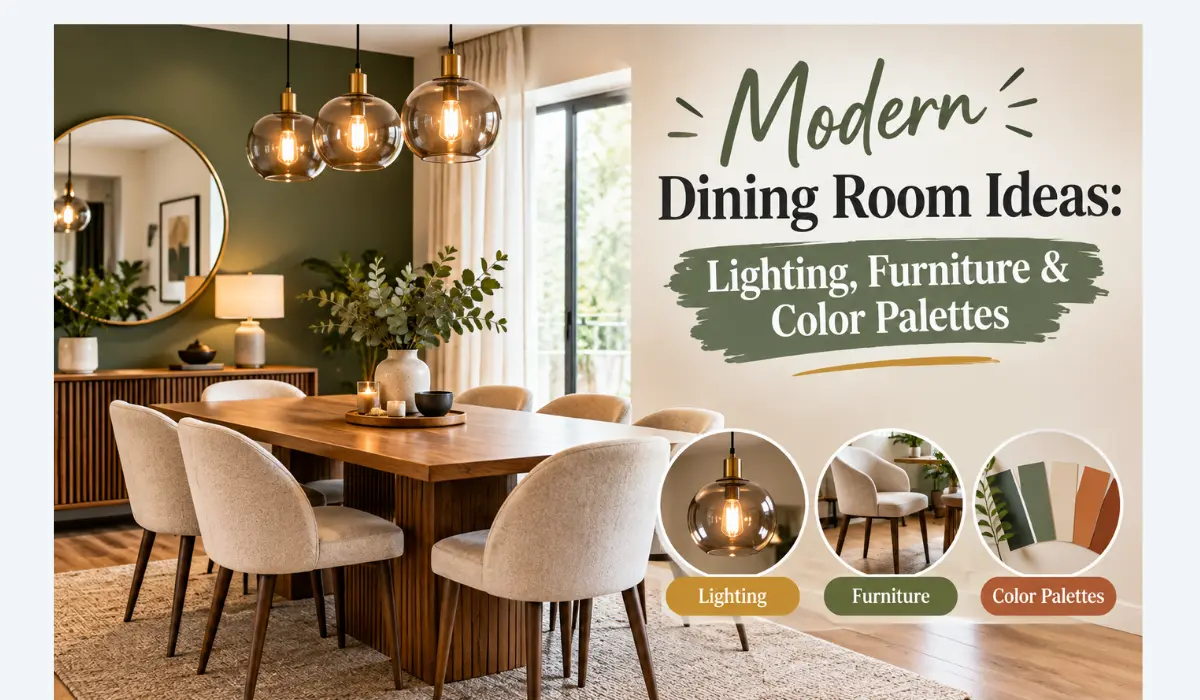
Modern Dining Room Ideas: Lighting, Furniture & Color Palettes (2026 Guide)
Quick answer: A modern dining room in 2026 mixes warm, moody color palettes with statement lighting, curved and tactile furniture, and layered decor that feels collected rather than staged. The trend has moved away from cold minimalism and matched furniture sets toward rooms designed for lingering — not just eating.
If you’ve ever walked into a dining room and felt absolutely nothing, you already know why this space gets overlooked so often. For years, open-plan living turned dining rooms into an afterthought — a table shoved near the kitchen, a light fixture nobody chose on purpose. But that’s changing fast. People are craving a dedicated spot for slow meals, real conversations, and the kind of evenings that don’t involve a phone on the table.
This guide breaks down exactly how to get there: the lighting that sets the mood, the furniture that makes people want to stay seated, and the color palettes designers are actually using in 2026 — not just what looks good on a moodboard.
What Makes a Dining Room Feel “Modern” Right Now
Forget the all-white, all-gray dining rooms of the last decade. Modern in 2026 means:
- Warmth over sterility — wood tones, textured fabrics, and grounding colors instead of stark minimalism
- One hero piece — usually the table or the light fixture, styled like the centerpiece it is
- Curved, tactile furniture — soft edges on chairs, tables, and sideboards instead of harsh angles
- Layered lighting — never just one overhead bulb doing all the work
- A “collected” look — mismatched, personal pieces instead of a matching five-piece set
Keep these five ideas in mind as you read the rest of this guide — almost everything below builds on them.
Lighting Ideas That Actually Transform the Room
Lighting is the fastest, cheapest way to upgrade a dining room, and it’s also where most people underinvest.
Go layered, not single-source
Relying on one ceiling light — especially a plain recessed can — flattens the whole room. Designers now pair a showpiece fixture (a sculptural pendant, an oversized chandelier, or even two chandeliers side by side over a long table) with discreet secondary lighting like wall sconces, cove LEDs, or a dimmable strip under a sideboard. The main fixture gives the room personality; the secondary lighting keeps it comfortable when you’re not hosting a dinner party.
Choose warmer color temperatures
Stick to 2700K–3000K warm white bulbs. Anything cooler (4000K+) reads as clinical, more like an office than a place you’d want to linger over dinner. Warmer light is also more flattering — a detail that matters more than people realize when you’re entertaining.
Make the fixture itself a statement
Bold is the theme for 2026. Think organic, branch-like or hand-shaped pendants, woven rattan chandeliers, or a mixed-material fixture that plays off your table. Recessed lighting alone is considered dated this year — the dining room is where homeowners are told to “have fun” with lighting choices.
Quick checklist for dining room lighting:
- Hang the main fixture roughly 30–34 inches above the table for standard 8-foot ceilings
- Put every fixture on a dimmer — mood matters more than brightness here
- Add one layer of ambient light beyond the main fixture (sconces, LED strips, or a floor lamp in the corner)
- Choose 2700K–3000K bulbs for a cozy, flattering glow
Furniture Ideas: Building a Room People Don’t Want to Leave
The table is the hero again
After years of dining tables being purely functional, they’re back to being the centerpiece. Warm woods like walnut and teak, satin finishes, and hand-finished edges are leading the way. If your space needs to flex between everyday meals and hosting, an extendable table solves that without making the room feel like a compromise every day of the week.
Curves are replacing hard angles
Rounded table edges, sloped chair arms, and curved sideboards aren’t just an aesthetic choice — they’re practical in smaller rooms too, since curved furniture is easier to move around and doesn’t create sharp pinch points in tight layouts. If you’re working with a compact space, this is one of the easiest wins on this list.
Mix, don’t match
The matched five-piece dining set is on its way out. Designers are mixing chair styles, pairing a vintage sideboard with a new table, or combining two different pendant styles over one table. The result feels intentional and collected rather than showroom-generic — and it’s far more forgiving if you’re building the room piece by piece over time.
Choose furniture with texture
Woven cane chairs, tactile upholstery, hand-painted or scalloped surfaces — 2026 design leans into pieces you want to touch, not just look at. Durable, well-made pieces with a traceable origin are being treated as heirlooms rather than disposable furniture.
Since flooring sets the stage for every piece of furniture sitting on top of it, it’s worth getting that layer right first — this breakdown of affordable flooring trends is a good next stop if your dining room floor still needs an update.
Color Palettes Defining Dining Rooms in 2026
Color is doing more work in dining rooms than almost any other room in the house this year, largely because dining rooms are used mostly in the evening — which makes them the perfect place to experiment with deeper, more saturated tones without living in a dark room all day.
| Palette Style | Key Colors | Best For |
|---|---|---|
| Earthy & warm | Terracotta, sandy beige, rich brown | Timeless, cozy, works with any home style |
| Moody jewel tones | Emerald, sapphire, burgundy | Evening-focused rooms, dramatic dinners |
| Color drenching | One saturated hue on walls, trim, and ceiling | Small rooms that need an enveloping, retreat-like feel |
| Contrast pairings | Cobalt + ochre, forest green + coral | Statement walls, art-forward dining rooms |
Color drenching — painting the walls, trim, and even the ceiling in one rich color — is one of the standout techniques this year. It sounds bold, but in a small or oddly shaped dining room, it actually makes the space feel more intentional, not smaller, because there’s no jarring transition between wall and ceiling color.
If you’re still deciding on a palette for the whole house and not just the dining room, this guide to color combinations for a new home pairs well with the ideas above — many of the same tones (sage green, terracotta, warm taupe) show up in both spaces.
Top Countries Inspiring Modern Dining Room Design
Dining room trends rarely come from nowhere — most of what’s popular right now traces back to a handful of countries with a strong, recognizable design identity. Here are the ones shaping global dining room aesthetics the most, based on design industry coverage and search and social interest data.
- Japan — The root of the “Japandi” aesthetic. Japanese dining spaces favor serene minimalism, neutral tones, and natural materials, with almost no visual clutter. If your dining room feels calm rather than busy, you’re borrowing from this style.
- Italy — Recognized globally for luxury furniture and refined detailing, with Milan’s design scene setting the tone for high-end dining tables, lighting, and finishes.
- Sweden & Denmark (Scandinavia) — The source of the clean lines, functional layouts, and “hygge” warmth that influence almost every “minimalist but cozy” dining room you’ll see online.
- France — Known for elegant, slightly eclectic interiors that mix vintage furniture with luxurious materials — think a curved antique sideboard next to a modern table.
- United States — A major influence simply through the sheer range of styles it produces, from bohemian mixed-furniture looks to bold, color-drenched dining rooms.
- Morocco — Brings the opulent color and pattern layering seen in bolder, jewel-tone dining room trends.
You don’t need to pick just one — most of the dining rooms featured in this guide actually blend two or three of these influences at once (Japandi being the most obvious example).
Common Mistakes to Avoid
- Relying on a single overhead light — it flattens the room and kills the mood you’re trying to build
- Matching every piece of furniture — a fully matched set reads as generic, not polished
- Going too cool with lighting — anything above 3000K feels clinical in a dining space
- Ignoring scale — a pendant that’s too small over a long table looks accidental, not intentional
- Treating the dining room as leftover space — a home office corner squeezed next to the table undercuts the “gathering space” feeling most 2026 designs are going for
Best Practices Checklist
- Pick one hero piece (table or light fixture) and build the room around it
- Layer at least two lighting sources, both on dimmers
- Choose a palette from the table above based on how the room is actually used — evening dinners can handle darker, moodier tones
- Mix furniture eras and finishes instead of buying a matching set
- Add texture through chairs, rugs, or wall treatments before adding more objects
Frequently Asked Questions
What is the most popular dining room color for 2026?
Warm, earthy tones like terracotta and sandy beige are the most universally popular, while moody jewel tones like emerald and sapphire are trending for evening-focused, dramatic dining rooms.What light color temperature is best for a dining room?
2700K–3000K warm white is best. It creates a cozy, flattering glow and avoids the clinical feel of cooler light temperatures.Should dining room furniture match?
No — 2026 design favors a mixed, collected look over a matched furniture set. Pairing different chair styles or a vintage sideboard with a modern table feels more intentional than a uniform set.What is the Japandi dining room style?
Japandi combines Japanese minimalism with Scandinavian warmth — neutral colors, natural materials, and serene, clutter-free layouts that still feel cozy rather than empty.How high should a light fixture hang above a dining table?
For a standard 8-foot ceiling, hang the main fixture about 30–34 inches above the tabletop, adjusting slightly higher for taller ceilings.
Final Thoughts
A modern dining room in 2026 isn’t about following a rigid style — it’s about warmth, intention, and a few well-chosen pieces that make people want to sit down and stay a while. Start with lighting since it changes the mood instantly, build your furniture around one hero piece, and let your color palette match how you actually use the room, not just how it photographs. Get those three right, and everything else falls into place.