Punjab Under Tension: Why Farmers, Sikh Groups, and Political Parties Are All Protesting at Once
If you’ve checked the news out of Punjab lately, it probably felt like three different states colliding into one. Farmers blocking a border. Police using water cannons on a crowd demanding a jailed MP’s release. Two political parties trading accusations over a businessman’s murder.
None of these stories are actually connected by a single cause. But they’re happening in the same weeks, in the same state, and that’s exactly why so many people are searching for one thing: what is actually going on in Punjab right now?
This guide untangles it. No spin, no side-picking — just what’s happening, who’s involved, why it matters, and where each story stands today.
Quick Answer
Punjab is currently dealing with three separate, overlapping sources of unrest:
- Farmers are protesting India’s proposed free trade agreements with the US, EU, UK, and New Zealand, fearing cheaper imports will hurt small farmers and dairy producers. Convoys headed for Delhi were repeatedly stopped at the Punjab–Haryana border in July 2026.
- Sikh political and religious groups, led by Akali Dal–Waris Punjab De, are demanding the release of Khadoor Sahib MP Amritpal Singh, who has been in custody since April 2023. Police used water cannons on protesters in Chandigarh on July 29, 2026.
- AAP (the ruling party in Punjab) and the BJP are locked in a public dispute over law and order, after the killing of an Abohar businessman reignited allegations about gangster networks operating in the state.
These are distinct issues with different causes, different demands, and different players — but together they’re painting a picture of a state under real political and social strain.
Table of Contents
- Why Is Punjab So Tense Right Now? A Fast Overview
- Story 1: Farmers vs Free Trade Agreements
- Story 2: The Amritpal Singh Detention Protests
- Story 3: The AAP–BJP Law and Order Clash
- How These Three Stories Connect (and Where They Don’t)
- Comparison Table: The Three Protests at a Glance
- Common Misconceptions About “Punjab Unrest”
- What Happens Next
- Key Takeaways
- FAQs
Why Is Punjab So Tense Right Now? A Fast Overview
Punjab has always had a complicated relationship with protest. It’s a border state, an agricultural powerhouse, and a place where religious identity, farming livelihoods, and politics are tightly woven together. When any one of those threads gets pulled, it tends to affect the other two.
Right now, all three threads are being pulled at once:
- Economic anxiety over trade deals that could open Indian agriculture to foreign competition.
- Political and religious grievance over the prolonged detention of a Sikh leader-turned-MP.
- Public safety concerns, with rival parties accusing each other of being soft on organized crime.
None of these are new tensions. Punjab has seen farmer agitations before (most famously the 2020–2021 farm law protests), and disputes over Sikh political detentions go back decades. What’s different in 2026 is the timing — all three flared up within the same few weeks, which is why the state feels like it’s constantly in the headlines.
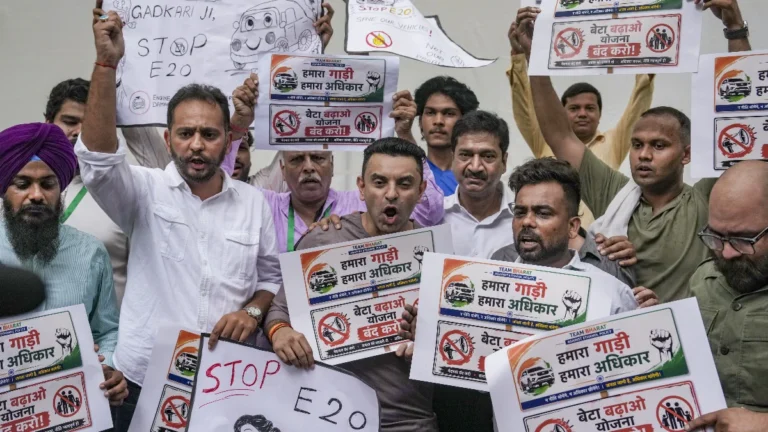
Punjab isn’t protesting in isolation, either. The same weeks that saw farmer convoys stopped at the Shambhu border also saw a very different kind of demonstration take shape in Delhi, where a satirical, internet-born movement called the E20 Janta Party turned Jantar Mantar into a protest site again — this time over ethanol-blended fuel rather than farm policy or detention law. It’s a useful reminder that 2026 has been a genuinely high-friction year for public protest across India, not just in Punjab.
Story 1: Farmers vs Free Trade Agreements — Why They’re Marching Again
The quick version
Punjab farmers are protesting against free trade agreements India is negotiating with the United States, European Union, United Kingdom, and New Zealand. Their core fear: cheaper, subsidised imports could undercut Indian crop prices, damage dairy farmers, and threaten small and medium businesses.
What actually happened
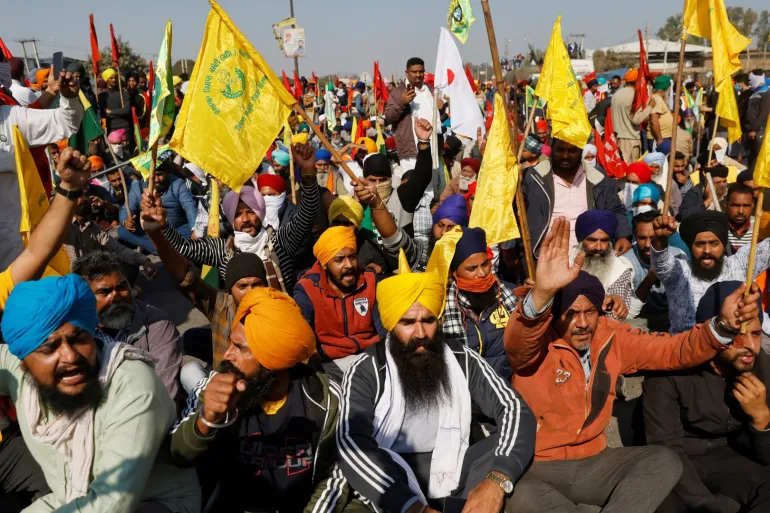
On the night of July 20, 2026, farmer convoys from Punjab and Haryana began moving toward Delhi under the banner of the Desh Bachao Morcha (“Save the Country Front”), heading for a Kisan Mahapanchayat (farmers’ grand assembly) at Kisan Ghat.
Many convoys never made it that far. Haryana Police set up barricades and cement blockades at the Shambhu border, the same flashpoint that became infamous during the 2020–2021 farm law protests. Farmer leader Tejveer Singh, a spokesperson for the Bharatiya Kisan Union (Shaheed Bhagat Singh), alleged that Haryana police had even placed barricades inside Punjab’s jurisdiction — a claim that adds a state-versus-state tension to an already federal-versus-state standoff.
Some protesters braved heavy rain and reached Kisan Ghat by July 21, where the rally went ahead despite the blockades elsewhere.
What farmers are actually demanding
This is where a lot of coverage gets vague. Here’s specifically what farmer unions are asking for:
- Full transparency on trade negotiation documents — the Samyukta Kisan Morcha (SKM), an umbrella body of farmer unions, wrote directly to President Droupadi Murmu demanding that FTA terms be made public and debated in Parliament before signing.
- Agriculture and dairy carved out of any India–US trade deal.
- Release of detained protest leaders picked up during the convoy’s march to Delhi.
- A meeting with the Union Agriculture Minister to formally register their objections.
Why farmers are worried about these specific trade deals
This isn’t reflexive protectionism. The concern has a clear economic logic:
The core fear, in plain terms: The US and EU heavily subsidise their own farmers. If Indian markets open to those subsidised products, they can undercut local prices — and Indian farmers, especially small and marginal ones without that subsidy cushion, can’t compete on price alone.
Dairy is the most sensitive flashpoint. India’s dairy sector is dominated by small producers and cooperatives (like Punjab’s own milk economy), and even a modest opening to subsidised imports could squeeze margins that are already thin.
A pattern, not a one-off
This is at least the fourth major round of Punjab farmer mobilisation in six years — after the 2020–2021 farm law protests, the 2024 “Delhi Chalo” march over MSP (Minimum Support Price) guarantees, and various state-level marches to the Punjab Assembly over unmet promises. Farmer leaders have openly said the Centre made commitments during earlier agitations that were never fully honoured, which is part of why trust is low and mobilisation is fast this time around.
Story 2: The Amritpal Singh Detention Protests — Who, What, and Why Now
The quick version
Amritpal Singh is the sitting MP from Khadoor Sahib and head of the Sikh organisation Waris Punjab De. He’s been in custody since April 2023, most of it under the National Security Act (NSA), a preventive detention law that doesn’t require a trial. Sikh political groups, led by Akali Dal–Waris Punjab De, are demanding his release, and a protest march in Chandigarh on July 29, 2026 turned into a clash with police, who used water cannons to disperse the crowd.
Who is Amritpal Singh?
Amritpal Singh returned to Punjab in 2022 after living in Dubai, following the death of Punjabi actor and activist Deep Sidhu. He took over Sidhu’s organisation, Waris Punjab De, and became known for pro-Khalistan rhetoric — advocacy for an independent Sikh state, a position that is illegal to actively organise for under Indian law but that remains a live political and social fault line in Punjab and among the Sikh diaspora.
The timeline that got him here
| Date | Event |
|---|---|
| Feb 23, 2023 | Amritpal and supporters storm Ajnala police station in an attempt to free a detained aide; clashes with police follow |
| April 23, 2023 | Amritpal arrested in Moga’s Rode village after a month-long manhunt; detained under NSA |
| June 2024 | Wins the Lok Sabha election from Khadoor Sahib as an Independent candidate — while still in jail — by a margin of nearly 2 lakh votes |
| 2024–2025 | NSA detention extended repeatedly (each extension requires a fresh review) |
| Nov 2025 | Supreme Court declines to hear his plea against the detention, directs him to the Punjab & Haryana High Court instead |
| April 2026 | Punjab government tells the High Court it will not extend his NSA detention further — but signals it will re-arrest him under other pending criminal cases instead |
| April 17, 2026 | High Court rejects the legal challenge to his detention, calls the order “clear as daylight” and beyond judicial interference |
| July 29–30, 2026 | Akali Dal–Waris Punjab De workers protest in Chandigarh demanding his release; police use water cannons; clashes reported at the Chandigarh–Mohali border |
Why this keeps triggering protests
The legal situation here is genuinely unusual, which is part of why it keeps generating news cycles. Amritpal has been held for roughly three years primarily through preventive detention — meaning he hasn’t been convicted of a crime through trial for most of that period. His lawyers argue the entire basis for the original detention rests on one FIR (First Information Report) where a chargesheet was already filed years ago, which they say undermines the “he’s still a threat” justification for repeated extensions.
The state’s position is the opposite: officials cite intelligence inputs about continued security risks, alleged links to banned outfits, and — more recently — new cases including one under the Unlawful Activities (Prevention) Act (UAPA) alleging he coordinated with a designated terrorist figure.
Both of these positions can be represented fairly without picking a winner here — that’s genuinely a live legal dispute, and it’s still working through India’s courts.
Why it matters beyond one man
For Akali Dal–Waris Punjab De and sympathetic Sikh organisations, this has become a symbol of a broader grievance: that Sikh political dissent, even when it wins a democratic mandate (he is an elected MP), gets treated as a security threat rather than a political position. For the state government, it’s framed as a law-and-order and national security matter, not a political one. Both framings are actively being contested in public and in court.
Story 3: The AAP–BJP Clash Over Law and Order in Punjab
The quick version
A businessman in Abohar was shot dead in early July 2026. Two of the accused were then killed in a police “encounter.” BJP leader Manjinder Singh Sirsa alleged Punjab was becoming a “police state” and demanded a CBI probe into the encounter deaths. AAP, which governs Punjab, responded with protests across the state accusing BJP of shielding organized crime figures.
What happened, step by step
- July 7, 2026: Businessman Sanjay Verma, co-owner of a tailoring shop in Abohar, was shot dead in broad daylight by three assailants.
- July 8, 2026: Two men who allegedly helped the shooters escape were killed in a police encounter.
- July 9, 2026: BJP’s Manjinder Singh Sirsa said Punjab was “turning into a police state,” alleging that “innocent” people were being killed in encounters, and called for a CBI (Central Bureau of Investigation) probe into the Abohar killings.
- Following days: AAP leaders and workers staged protests against BJP in multiple Punjab cities — Jalandhar, Pathankot, Amritsar, Ludhiana, Patiala, and Abohar among them — accusing Sirsa of defending the accused and, by extension, criminal networks.
The accusation at the center of it
AAP’s Finance Minister Harpal Singh Cheema pointed to Punjab Police’s claim that the Abohar murder was linked to the Lawrence Bishnoi gang, a criminal network that has been repeatedly connected to targeted killings across North India in recent years. Bishnoi is currently in Gujarat’s Sabarmati Jail. AAP’s argument is essentially: we’re the ones cracking down on this network, while BJP leaders defend the accused.
BJP’s counter-argument is about due process: that “encounter” deaths of accused persons before trial deserve independent scrutiny, regardless of who the accused allegedly work for, and that “police state” framing reflects a broader concern about how law and order is being handled under the AAP government.
Why this is a real search topic, not just noise
This dispute matters beyond the back-and-forth because it touches something people genuinely search for: is Punjab safe right now, and can residents trust how the police are handling gang violence? That’s a legitimate public safety question sitting underneath the political theatre.
How These Three Stories Connect (and Where They Genuinely Don’t)
It’s tempting to lump “Punjab protests” into one narrative. Resist that urge — it actually makes you less informed, not more.
Where they’re connected:
- All three reflect a broader sense of friction between Punjab and the central government (on trade policy, on detention powers, and on federal law enforcement involvement).
- All three involve police using force or barricades against protesters or in enforcement actions, which is fueling a general public conversation about policing in the state right now.
- All three are happening under the same AAP state government, which is simultaneously dealing with farmer anger, Sikh political anger, and opposition pressure — a genuinely difficult position for any state administration.
Where they’re completely separate:
- The farmers’ protest is an economic dispute with the central government over trade policy. It has nothing to do with Sikh separatism or gang violence.
- The Amritpal Singh protests are about a specific legal detention case tied to Sikh political identity, not economics or crime policy.
- The AAP–BJP law and order dispute is a state-versus-opposition political fight about policing, not about farming or Sikh political detention.
Treating these as one undifferentiated “Punjab is in chaos” story is exactly the kind of oversimplification that leads to bad information. Each deserves to be understood on its own terms.
Comparison Table: The Three Protests at a Glance
| Farmers’ Protest | Amritpal Singh Protests | AAP–BJP Law & Order Clash | |
|---|---|---|---|
| Who’s protesting | Farmer unions (SKM, Desh Bachao Morcha) | Akali Dal–Waris Punjab De, Sikh groups | AAP workers (protesting BJP) |
| Who they’re protesting against | Central government (trade policy) | Punjab state government (detention) | BJP (over Abohar killings) |
| Core issue | Fear of cheaper imports under FTAs | Prolonged preventive detention of an MP | Alleged gangster links & encounter deaths |
| Key location | Shambhu border, Kisan Ghat, Delhi | Chandigarh, Chandigarh–Mohali border | Cities across Punjab |
| Recent flashpoint | Convoys blocked, July 20–21, 2026 | Water cannons used, July 29, 2026 | Protests since July 9, 2026 |
| Legal/political track | Ongoing negotiations, no resolution yet | Active in Punjab & Haryana High Court | Demand for CBI probe pending |
| Underlying question | Will India protect farmers in trade deals? | Is a preventive detention still justified? | Who’s responsible for organized crime in Punjab? |
Common Misconceptions About “Punjab Unrest”
Myth: All the protests are anti-government and coordinated. Fact: They’re organised by entirely different groups with different, sometimes opposing, political affiliations. AAP is protesting against BJP in one story, while facing protest pressure from farmers and Sikh groups in the others.
Myth: The farmer protests are the same 2020–2021 farm law protests continuing. Fact: The 2020–2021 protests were about three specific farm laws, which were repealed. The current protests are about separate proposed trade agreements with the US, EU, UK, and New Zealand — different issue, some overlapping organisers and locations.
Myth: Amritpal Singh has been convicted of a crime. Fact: As of writing, his detention has been primarily through preventive measures (NSA) rather than a criminal conviction. His legal team disputes the justification for continued detention; the state maintains it’s necessary on security grounds. This is an active legal dispute, not a settled fact either way.
Myth: The Abohar killing dispute is purely political theatre with no real public safety angle. Fact: Underneath the political blame-trading is a genuine, unresolved question about organized crime networks operating across state lines in Punjab — one that predates and outlasts any single political dispute.
What Happens Next
- Farmers: Watch for the outcome of India–US trade negotiations. If a deal is signed without agricultural carve-outs, expect renewed and likely larger farmer mobilisation, possibly reviving the tactics used in the 2020–2021 protests (long-term border encampments).
- Amritpal Singh: The Punjab & Haryana High Court is actively hearing challenges related to his continued custody. Any court ruling — either way — is likely to trigger a fresh round of public reaction from Sikh political groups.
- Law and order: Whether a CBI probe into the Abohar encounter deaths is actually ordered will be the next major marker. If it happens, expect it to dominate the AAP–BJP conflict for weeks; if it doesn’t, expect the political sparring to continue without resolution.
Key Takeaways
- Punjab is currently facing three distinct sources of unrest — economic, political-religious, and law-and-order — that happen to be peaking at the same time.
- Farmers are protesting proposed free trade agreements, not farm laws, fearing cheaper subsidised imports will hurt small producers and dairy farmers.
- Amritpal Singh’s continued detention — mostly under preventive detention laws rather than criminal conviction — remains legally and politically contested, with active proceedings in the Punjab & Haryana High Court.
- The AAP–BJP dispute over the Abohar killings centers on a real, unresolved question: how is Punjab handling organized crime, and are police “encounters” getting enough independent scrutiny?
- These three stories are not part of one unified movement — treating them that way leads to a less accurate picture of what’s actually happening.
Frequently Asked Questions
Is Punjab currently under any kind of curfew or emergency?
No. As of the most recent developments covered here, there’s no state-wide curfew or emergency declared. There have been localised barricades, border blockades, and heavy police deployment at specific protest sites — that’s different from a state-wide emergency measure.
Why do farmers keep protesting even after the 2021 farm law repeal?
Because their core long-term demand — a legal guarantee for Minimum Support Price (MSP) — was never enacted, and now they face a new concern: trade agreements that could expose Indian agriculture to foreign competition without that safety net in place.
Is Amritpal Singh still an MP while in custody?
Yes. He won the 2024 Lok Sabha election from Khadoor Sahib as an Independent candidate while already in jail, and remains the sitting MP for that constituency even while detained.
What is the National Security Act (NSA), and why does it matter here?
The NSA is an Indian law that allows authorities to detain someone preventively — without a criminal trial — if they’re deemed a threat to public order or national security. Detentions can be extended in increments (commonly three months to a year at a time) after review by an advisory board. It’s a legal tool that’s separate from, and doesn’t require, a criminal conviction.
Is the Punjab government blaming the central government for these protests?
Partially, and it depends which story. On trade policy, AAP and farmer unions are aligned in pressuring the central government. On the Amritpal Singh detention, the Punjab state government is the one making detention decisions, so it faces direct pressure from Sikh groups. On the Abohar killings, AAP (the state government) is defending its own police force against BJP’s criticism.
Where can I follow reliable, ongoing coverage of these stories?
Look for wire-service and established regional outlets that cite named sources, court filings, and official statements — rather than social media threads. Coverage of active legal matters (like the Amritpal Singh case) is especially prone to rumour, so court-verified updates are the most reliable anchor.