
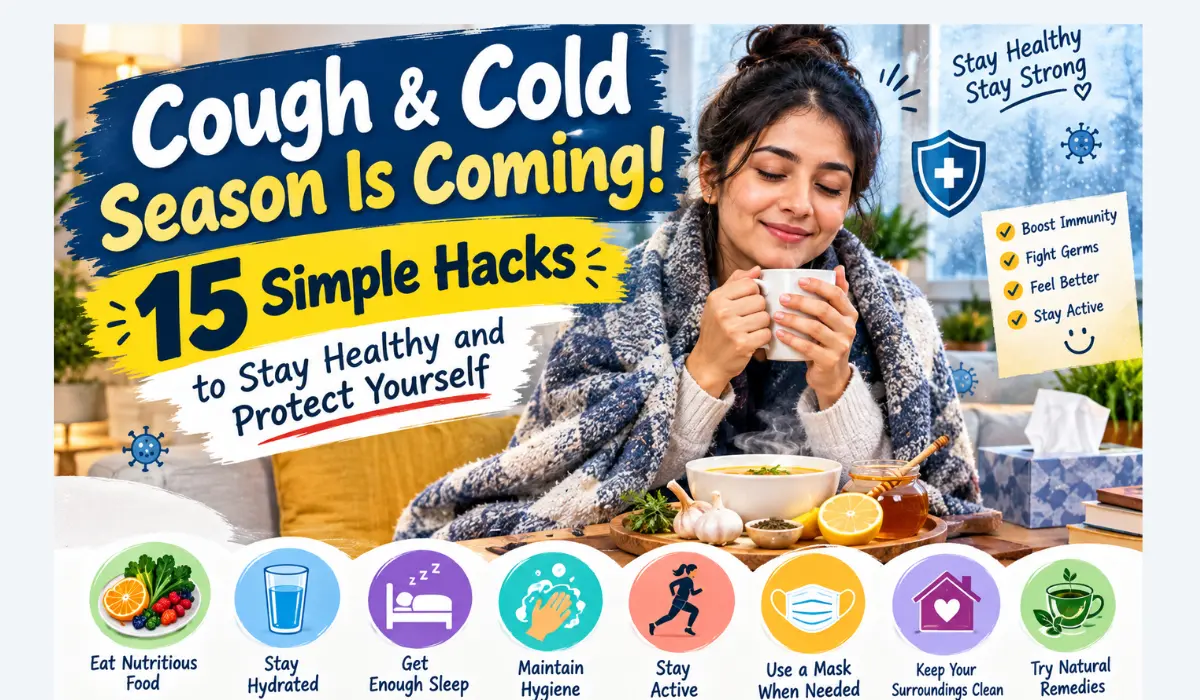
Cough & Cold Season Is Coming! 15 Simple Hacks to Stay Healthy and Protect Yourself
Somewhere between the first foggy morning and the first AC-to-outside temperature shock, someone in the house starts sneezing. A few days later, it’s the whole family. Sound familiar?
Cough and cold season has a way of moving through Indian homes, offices, schools and metro coaches faster than anything else. One sniffle in a crowded local train, one shared water bottle at school, one cousin who “just has a little cold” at a family function — and suddenly half the household is reaching for tissues.
Here’s the honest, short answer: there is no guaranteed way to avoid every cold. Viruses are everywhere, and closed, crowded indoor spaces make it easier for them to spread. But several proven daily habits can meaningfully lower your risk and, just as importantly, protect the people around you — your parents, your children, your colleagues.
This article walks through 15 practical, evidence-based hacks for Indian households, a simple daily routine, how to tell the common cold apart from flu or COVID-19, common myths worth dropping, and clear signs of when to see a doctor.
Why cough and cold cases rise during certain times of the year
Coughs and colds are usually caused by viruses — rhinoviruses most often, alongside others like coronaviruses and respiratory syncytial virus (RSV). These viruses spread mainly two ways: through respiratory droplets released when someone coughs, sneezes or talks nearby, and through hands that touch a contaminated surface and then touch the eyes, nose or mouth.
Cold weather itself doesn’t directly cause a viral infection. What changes in cooler or wetter months is behaviour and environment:
- People spend more time indoors, with doors and windows shut, which lets viral particles build up in the air.
- Schools, offices, weddings and festive gatherings bring more people into close, prolonged contact.
- Many respiratory viruses, including influenza, circulate more actively during particular months, though patterns vary by region. In India, influenza activity often peaks during the monsoon in several regions, with additional winter activity in the north — a pattern that differs from the single “winter flu season” seen in colder countries.
It also helps to know that the common cold, seasonal influenza (flu) and COVID-19 are different illnesses, but their early symptoms — runny nose, sore throat, cough, mild fever, tiredness — can overlap considerably. You often cannot reliably tell them apart by symptoms alone, especially in the first day or two. That’s one reason precautions matter regardless of which virus you suspect.
The 15 simple hacks to stay healthy and protect yourself
1. Wash your hands properly, not just quickly
Hands are the most common way viruses travel from surfaces to your face. The CDC recommends washing with soap and running water for at least 20 seconds — about the time it takes to hum “Happy Birthday” twice — covering the backs of hands, between fingers, and under nails, then rinsing and drying well.
In everyday Indian life: wash hands after getting off a bus or metro, after handling cash or grocery bags, before eating, and as soon as you’re home. When soap and water aren’t available — say, right after a train journey — an alcohol-based hand sanitizer (at least 60% alcohol) is a reasonable stand-in until you can wash properly.
Takeaway: proper handwashing, done often enough, is still one of the single most effective habits against respiratory and stomach infections.
2. Stop touching your eyes, nose and mouth with unwashed hands
Viruses on your hands can’t infect you until they reach a mucous membrane — the eyes, nose or mouth are the usual entry points. Health researchers have found people touch their faces without realising it dozens of times an hour.
In everyday Indian life: this habit is hardest to break at your desk, while scrolling your phone, or while wearing glasses that need constant adjusting. Keep a tissue or a small hand wipe nearby, and try to notice the urge before you act on it.
Takeaway: breaking this one habit lowers your personal risk even if you can’t avoid every contaminated surface.
3. Let fresh air into closed rooms
Indoor air that doesn’t circulate lets fine respiratory particles hang around longer, increasing the chance of inhaling them if someone infected has been in the room. Improving ventilation — opening a window, running an exhaust fan, or simply airing out a room between uses — helps dilute and clear this air.
In everyday Indian life: in a Delhi or Mumbai apartment with the AC running most of the day, this often gets skipped. Try opening windows for 10–15 minutes a few times a day, especially in bedrooms and classrooms where people spend hours together. In offices, ask facilities teams whether ventilation settings can be adjusted during flu season.
Takeaway: fresh airflow is a free, simple way to reduce the concentration of airborne particles in a shared room.
4. Wear a well-fitting mask in crowded or high-risk indoor spaces
A well-fitting mask, worn consistently, can reduce the respiratory particles you breathe in and breathe out. It’s particularly useful in crowded indoor places — a packed local train, a busy OPD waiting area, a lift — or when you’re near someone who is unwell.
In everyday Indian life: during your own commute in peak festive-season crowds, or when visiting a hospital to see a relative, a mask is a sensible extra layer, not an overreaction. Fit matters more than fabric — a loose mask with gaps around the nose offers much less protection.
Takeaway: masks work best as one part of a layered approach — combined with handwashing and ventilation — not as a stand-alone solution.
5. Keep a sensible distance from people who are visibly unwell
Standing close to someone who is coughing or sneezing increases your exposure to respiratory droplets. Keeping a little distance where practical — without making the person feel unwelcome or judged — is a simple risk-reduction step.
In everyday Indian life: at a family gathering, it’s fine to greet a coughing relative warmly from a slight distance instead of a close hug, or to suggest they rest instead of serving food. The goal is kindness with awareness, not avoidance or stigma.
Takeaway: a little physical space during someone’s active symptoms protects both of you, without needing to isolate anyone socially.
6. Stay up to date with recommended vaccinations
Annual influenza vaccination is recommended in India’s national guidance particularly for healthcare workers, pregnant women and people with chronic health conditions, with vaccination for children under 5 and adults 65 and above categorised as desirable, per Ministry of Health and Family Welfare guidance summarised in peer-reviewed literature. Vaccination doesn’t prevent every common cold — colds are caused by many different viruses the flu vaccine doesn’t target — but it does reduce your risk of influenza and its complications.
In everyday Indian life: if you’re a healthcare worker, pregnant, elderly, or managing a chronic condition like diabetes or asthma, talk to your doctor about the seasonal flu shot before the season picks up. It’s not a routine, free vaccine for the general population in India the way it is in some countries, so ask specifically.
Takeaway: vaccination is one useful layer of protection against flu specifically — not a universal shield against every cough or cold.
7. Get enough sleep
Sleep plays an important role in how well your immune system functions generally. Poor or insufficient sleep is linked with being more susceptible to catching common infections, according to broader immunology and sleep research summarised by health authorities.
In everyday Indian life: late-night web series binges, exam stress for students, and long commutes eating into rest time are all common culprits. Adults generally need around 7–9 hours; school-age children typically need more, often 9–12 hours depending on age, per general paediatric sleep guidance.
Takeaway: consistent, adequate sleep supports your body’s everyday defences — it isn’t a guarantee, but it matters.
8. Eat a balanced, varied diet
No single food or supplement prevents a cold. What does help, over time, is an overall balanced diet — vegetables, fruit, dals and other protein sources, whole grains, and healthy fats — which supports general health and immune function.
In everyday Indian life: a simple thali with dal, sabzi, roti and a seasonal fruit already covers most bases. Don’t fall for the idea that any one “superfood” or juice will prevent infection on its own — variety over time matters more than any single ingredient.
Takeaway: think of food as long-term support for your body, not a short-term shield against this week’s cold.
9. Stay adequately hydrated
Drinking enough fluids supports general wellbeing and can help keep your throat and nasal passages more comfortable, especially if you already have mild symptoms. It’s worth being clear, though: extra water does not cure or prevent a viral infection.
In everyday Indian life: warm water, herbal teas, soups and daal-based fluids are all reasonable ways to stay hydrated, particularly if a sore throat is making you eat less. Just don’t expect any drink, however warm or “detox,” to stop a virus from taking hold.
Takeaway: hydration supports comfort and general health — it’s a helpful habit, not a preventive cure.
10. Keep frequently touched surfaces reasonably clean
Doorknobs, light switches, mobile phones, TV remotes and shared office equipment can carry viruses picked up from hands. Regular, ordinary cleaning of these surfaces — not aggressive daily disinfecting — is a sensible precaution, especially when someone at home is unwell.
In everyday Indian life: a quick wipe-down of shared surfaces like the fridge handle, light switches near the entrance, and your phone screen, a couple of times a week, is enough for most households. There’s no need for elaborate disinfection routines unless a family member is actively sick.
Takeaway: basic surface hygiene, kept up consistently, is more useful than occasional deep-cleaning panic.
11. Avoid smoking and second-hand smoke
Smoke irritates the lining of the airways, which can make you more prone to respiratory symptoms and can worsen an existing cough or cold. This applies to first-hand smoking and to second-hand smoke exposure, including from family members or in shared spaces.
In everyday Indian life: if someone in the household smokes, keeping it strictly outside and away from children, older relatives or anyone currently unwell reduces added strain on already-irritated airways.
Takeaway: avoiding smoke exposure protects your airways’ ability to recover and defend themselves.
12. Cover coughs and sneezes properly
Coughing or sneezing into your hands spreads virus particles onto every surface you then touch. The better approach: cough or sneeze into a tissue and throw it away immediately, or into your bent elbow if no tissue is handy — then wash your hands.
In everyday Indian life: this is especially worth teaching children explicitly, since the instinct is usually to cover with an open palm. Keep tissues in your bag, car and at your work desk during this season.
Takeaway: this one small habit change meaningfully cuts down how far and how easily your germs travel to others.
13. Stay home when you’re sick, where possible
Resting at home while you have symptoms reduces how many people you expose to infection — at work, at school, on public transport. This isn’t always fully practical in India’s work culture, but even reducing close, prolonged contact (skipping a crowded meeting, avoiding a packed train during your worst symptom days) helps.
In everyday Indian life: if you run a small business or work in a client-facing role, it can feel impossible to “just stay home.” Where full rest isn’t possible, at least mask up, keep distance from vulnerable colleagues, and avoid sharing food or utensils.
Takeaway: even partial reduction in close contact while you’re symptomatic protects the people around you.
14. Manage allergies and existing respiratory conditions carefully
Seasonal allergies — common in India around dust, pollution spikes and pollen — can cause a runny nose, sneezing and congestion that closely mimic a cold, which sometimes leads people to misjudge what they’re dealing with. If you have asthma or another chronic respiratory condition, a seemingly minor cold can trigger a flare-up.
In everyday Indian life: if you already know you have seasonal allergies, keep your usual antihistamine or nasal spray on hand as advised by your doctor, and don’t assume every runny nose this season is automatically a viral cold. If you have asthma or COPD, keep your prescribed inhaler and action plan ready, and contact your doctor early if your breathing symptoms shift.
Takeaway: don’t self-diagnose chronic conditions as “just a cold” — follow your clinician’s existing treatment plan and flag changes early.
15. Recognise symptoms early and act sensibly
The moment you notice a scratchy throat, a runny nose or unusual tiredness, small choices matter: start resting a bit more, keep some distance from others, and avoid pushing through a packed schedule if you can help it.
In everyday Indian life: many people power through the first day of symptoms because of work pressure or exams, which often extends recovery and increases the chance of passing it on. A half-day of rest at the first sign of symptoms is usually more effective than powering through and getting worse.
Takeaway: acting early — resting, hydrating, keeping distance — tends to shorten the disruption and protects those around you.
What to do if you already have a cough or cold
Most uncomplicated colds get better on their own with simple home care:
- Rest and fluids. Give your body the resources it needs to recover.
- Saline nasal spray or drops can help ease a blocked or runny nose, and are considered safe for most age groups, including many formulations suitable for infants — check the product label or ask a pharmacist for age-appropriate options.
- Warm drinks like tea with honey (for those over one year old) can be soothing for a sore throat.
- Honey for cough: some evidence suggests honey may help ease cough symptoms in children over one year and adults. However, honey must never be given to infants under 12 months, due to a small but serious risk of infant botulism.
- Steam inhalation: this is a popular home remedy in many Indian households, but it’s worth knowing that the NHS and British Burn Association have specifically warned that there is no strong scientific evidence it relieves colds or speeds recovery, and that it causes a meaningful number of serious burns every year, especially in children, from spilled or splashed hot water. If you want warm, moist air for comfort, a cooler-mist humidifier is a safer option than a bowl of boiling water.
- Over-the-counter medicines (decongestants, cough syrups, paracetamol for fever) can help manage symptoms but often have age restrictions, dosing limits and interactions with other medicines or conditions. Read the label carefully and check with a pharmacist or doctor if you’re unsure — this is especially important for children, pregnant women, and anyone on regular medication.
A clear point worth repeating: antibiotics do not work against ordinary viral colds. They target bacteria, not viruses, and using them unnecessarily doesn’t speed up recovery — it only adds side-effect risk and contributes to antibiotic resistance. Antibiotics should only be used when a doctor specifically prescribes them for a diagnosed bacterial infection.
Common cold, flu or COVID-19: how are they different?
Symptoms overlap a lot, and you often cannot reliably tell these apart just by how you feel — especially early on. This table is a general guide, not a diagnostic tool.
| Feature | Common cold | Influenza (flu) | COVID-19 |
|---|---|---|---|
| Onset | Usually gradual | Often sudden | Variable — can be gradual or sudden |
| Fever | Uncommon or mild | Common, often higher | Common, variable |
| Body aches | Mild, if any | Often pronounced | Variable |
| Fatigue | Mild | Often significant | Variable, can be prolonged |
| Cough | Common, usually mild–moderate | Common, can be severe | Common, variable severity |
| Loss of taste/smell | Rare | Rare | Reported more often, though not in every case |
| Typical duration | About 7–10 days | About a week, fatigue may linger longer | Variable |
| Complication risk | Generally low | Higher in older adults, young children, chronic illness | Variable, higher in certain risk groups |
Because these illnesses genuinely overlap in symptoms, testing or medical evaluation is the only reliable way to know which one you have — this matters most when someone is in a higher-risk group, when symptoms are severe, or when a diagnosis would change treatment decisions.
When should you see a doctor?
Most colds resolve with rest and simple home care. But certain warning signs need prompt medical attention, regardless of how many days it’s been:
- Difficulty breathing, or breathing that is unusually fast or laboured
- Chest pain or pressure
- Bluish or grey lips, face or fingertips
- Confusion, unusual drowsiness or difficulty waking
- Signs of severe dehydration (very little urine, dizziness, extreme thirst)
- Symptoms that seem to improve and then suddenly get worse again
- A fever that is very high, doesn’t respond to usual measures, or persists for several days without improvement
Certain groups should seek medical advice earlier and more readily, even for symptoms that might seem mild in a healthy adult: infants, older adults, pregnant women, and people with chronic conditions such as asthma, diabetes, heart disease or a weakened immune system. There’s no single “magic number of days” that applies to everyone — how urgently you should seek care depends on your age, your symptoms, and your existing health.
If you or someone with you shows signs of severe breathing difficulty or any of the emergency warning signs above, seek emergency medical care promptly rather than waiting it out.
Myths about cough and cold that people should stop believing
“Drinking cold drinks or ice cream causes a viral cold.” Colds are caused by viruses, not by the temperature of what you eat or drink. Cold food might briefly irritate an already sore throat for some people, but it doesn’t cause the infection itself.
“Going outside with wet hair gives you a cold.” Wet hair or a chilly evening doesn’t directly cause a viral infection — you still need exposure to the virus itself. That said, feeling cold and uncomfortable for a long stretch isn’t pleasant, so drying off is still sensible self-care.
“Vitamin C or supplements guarantee you won’t catch a cold.” A generally nutritious diet supports overall health, but no single vitamin or supplement has been shown to reliably prevent colds in the general population. Be cautious of products that promise guaranteed immunity.
“Antibiotics will cure my cold faster.” As covered above, colds are viral, and antibiotics only work against bacteria. Taking them for a viral cold doesn’t help and isn’t harmless.
“Steam inhalation kills the virus inside you.” As NHS burns specialists have pointed out, there’s no strong evidence steam inhalation speeds recovery, and heat from steam cannot reach and “kill” a virus already inside your cells. It also carries a real risk of burns.
“Every cough needs cough syrup.” Many coughs, especially mild ones linked to a cold, settle on their own with rest and fluids. Cough syrups may offer some symptom relief for certain people but aren’t automatically necessary, and some have age restrictions — check before giving them to children.
“Herbal or home remedies are automatically safe for everyone.” Natural doesn’t always mean risk-free. Some herbal preparations can interact with medicines or aren’t appropriate for infants, pregnant women or people with certain health conditions. When in doubt, ask a pharmacist or doctor rather than assuming safety.
A simple daily routine to reduce infection risk
This routine brings the most useful habits together. Following it doesn’t guarantee you’ll avoid every cold — but it stacks several proven habits in your favour.
Morning
- Wash hands before breakfast
- Open a window for a few minutes to air out the bedroom
- Eat a balanced breakfast with some protein and fruit
During the day
- Carry a small hand sanitizer for commutes or work
- Mask up in crowded indoor spaces like trains or waiting areas
- Avoid touching your face; keep a tissue handy
- Take a short break if you feel a scratchy throat coming on
Evening
- Wipe down frequently touched surfaces at home if anyone is unwell
- Wind down with enough time for 7–9 hours of sleep (more for children)
- Avoid smoke exposure, including near family members who smoke
Special precautions for children, older adults and people with chronic conditions
Children: teach proper handwashing and covering coughs early — it sticks better as a habit when learned young. Follow your paediatrician’s guidance on vaccination eligibility. Keep sick children home from school where possible, both for their recovery and to protect classmates. Never give honey to infants under 12 months.
Older adults: immune response can weaken somewhat with age, and complications from flu tend to be more serious in this group, which is part of why India’s guidance specifically flags people 65 and above as a priority group to discuss flu vaccination with a doctor. Keep chronic conditions like diabetes or heart disease well managed, since these can also raise the risk of complications from respiratory infections.
People with chronic conditions (asthma, COPD, diabetes, heart disease, weakened immunity): stick closely to your existing treatment plan, keep prescribed medication accessible, and contact your doctor early if cold symptoms seem to be affecting your underlying condition rather than waiting to see if it passes.
In all these groups, the general advice is the same: don’t wait if something feels different from a typical mild cold — a quick call to your doctor is better than assuming it will resolve on its own.
Frequently asked questions
How can I prevent coughs and colds naturally?
No natural method guarantees prevention, but consistent handwashing, good ventilation, adequate sleep, a balanced diet and staying hydrated all genuinely support your body’s ability to fight off infections. Combine several habits rather than relying on just one.Does cold weather cause a common cold?
Not directly. Colds are caused by viruses. Cooler weather is linked to colds mainly because people spend more time indoors in close contact, which makes it easier for viruses to spread between people.What should I eat during cough and cold season?
A varied, balanced diet with vegetables, fruit, dal or other protein, and whole grains supports your general health. No single food prevents infection, so consistency over time matters more than any one “immunity-boosting” item.Does drinking warm water prevent a cold?
No. Warm water can be soothing for a scratchy throat and helps you stay hydrated, but it doesn’t prevent or cure a viral infection.Can vitamin C prevent a cold?
There’s no reliable evidence that vitamin C supplements prevent colds in most people. A generally nutritious diet is more useful than relying on any single supplement.Is steam inhalation helpful for a cold?
There’s no strong evidence it speeds recovery, and NHS burns specialists have warned it carries a real risk of serious burns, particularly for children. A cooler-mist humidifier is a safer way to add moisture to the air if that’s what you’re after.How can I avoid catching a cold from a family member?
Where practical, keep some distance from the person while they have active symptoms, avoid sharing utensils or towels, wash hands often, ventilate shared rooms, and encourage them to cover coughs and sneezes properly.When should I worry about a cough or fever?
Seek medical attention for difficulty breathing, chest pain, bluish lips, confusion, signs of severe dehydration, or symptoms that improve and then worsen again. Infants, older adults, pregnant women and people with chronic conditions should seek advice earlier and more readily than a healthy adult might.Can I go to work or school with a cold?
Where possible, resting at home while you’re most symptomatic reduces the risk of spreading the infection to others. If that’s genuinely not possible, masking, keeping distance from vulnerable people, and practising good hand hygiene reduce — though don’t eliminate — the risk to others.How long does a common cold usually last?
Most colds resolve within about 7 to 10 days, though a lingering cough can sometimes continue a bit longer. If symptoms are severe, worsening after initially improving, or lasting well beyond this window, it’s worth checking with a doctor.
Conclusion
There’s no single hack that guarantees you’ll sail through cough and cold season untouched — that’s simply not how viruses or immune systems work. But handwashing, good ventilation, sensible masking in crowded spaces, adequate sleep, a balanced diet, appropriate vaccination where relevant, and knowing when to rest instead of pushing through can meaningfully lower your risk and protect the people you live and work with.
Keep an eye out for the warning signs that need prompt medical attention, and don’t hesitate to consult a doctor when something feels different from your usual mild cold. Stay a little more careful this season — not anxious, just prepared.