Is Expensive Skincare Really Better?
No, not by default. Dermatologists consistently say price is not evidence of effectiveness — what actually determines results is the active ingredient (retinoids, niacinamide, vitamin C, peptides, salicylic acid) and how consistently you use it, not the brand or the weight of the jar. A $1,950 luxury cream can cost as little as $50–80 to formulate and produce; the rest goes toward marketing, packaging, and brand equity. That said, cheapest isn’t automatically best either — formulation quality, stability, and skin-specific fit still matter.
You’ve probably stood in that exact aisle: a $12 moisturizer on one shelf, a $325 one a few feet away, both claiming to hydrate and “transform” your skin. It’s a genuinely confusing moment, and skincare brands count on that confusion. So let’s actually settle it — with what dermatologists and ingredient science say, not what packaging implies.
The Short Version: Price Doesn’t Equal Performance
Dr. Yair Levin, a dermatologist at Ichilov Hospital, puts it plainly: price is not evidence of effectiveness. When people pay a premium for skincare, in many cases they’re paying for branding rather than better performance, the same way they might with clothing or makeup. The active ingredients are what matter — and effective ones like retinoids, niacinamide, and salicylic acid don’t require a triple-digit price tag to work.
This isn’t a fringe opinion. It’s the consensus across dermatology: a 2025 review of cosmeceutical ingredients confirmed that peptides, retinoids, and vitamin C remain the key drivers of anti-aging efficacy in skincare — and all three are available at nearly every price point, from drugstore to luxury.
Where the Money Actually Goes in a $300 Jar
This is the part brands don’t put on the label. Luxury skincare is a textbook example of what economists call a Veblen good — a product where demand increases because of the high price, not despite it. The cost itself becomes part of the appeal; it signals status.
Here’s a real comparison: La Prairie’s Platinum Rare Haute-Rejuvenation Cream retails around $1,950 for 50ml. The estimated cost to formulate, manufacture, and package it is roughly $50 to $80. The remaining several hundred dollars goes toward marketing, distribution, retail markup, and brand equity — not extra efficacy.
That doesn’t mean luxury products are useless. It means the right way to judge them is by their ingredient list and clinical data, not their price tag, their scent, or how heavy the jar feels in your hand.
| What You’re Paying For | Drugstore Brand | Luxury Brand |
|---|---|---|
| Active ingredients (retinol, niacinamide, vitamin C, ceramides) | Yes, often at effective concentrations | Yes, sometimes at similar or lower concentrations |
| Packaging & jar design | Basic | Often elaborate (airless pumps, glass, weight) |
| Marketing & brand equity | Minimal | Significant portion of the price |
| Clinical testing | Varies by brand | Varies by brand — not guaranteed by price |
| Fragrance & sensory experience | Simple | Often heavily engineered |
So What Actually Determines Whether Skincare Works?
Three things, in order of importance:
1. The Active Ingredient
This is the single biggest factor. A cleanser with 2% salicylic acid works the same whether it costs $8 or $80 — the acid doesn’t know the price of the bottle it’s in. Ingredients with strong clinical backing include retinoids (for anti-aging and acne), niacinamide (for barrier support and tone), vitamin C (for brightening and antioxidant protection), peptides, and hyaluronic acid (for hydration).
2. The Concentration and Formulation
This is where things get more nuanced — and where luxury brands sometimes do earn their price. A 2025 pricing analysis of over-the-counter retinol products found that efficacy isn’t purely about concentration; packaging that protects the product from light and air, and formulation techniques like encapsulation for gradual release, can meaningfully affect how well an ingredient performs and how well it’s tolerated. In other words, two products with the same percentage of retinol on the label can behave differently depending on how they’re built — but that’s a formulation question, not strictly a price one, since well-formulated affordable products exist too.
3. Consistency
This is the factor most people underestimate. Dermatology research consistently points to consistent, correct use of a suitable routine as a stronger driver of results than any single expensive product. A $15 retinol used nightly for six months will outperform a $150 retinol used sporadically, every time.
Where Splurging Actually Makes Sense — and Where It Doesn’t
Not every category benefits equally from a higher price, and dermatologists are fairly consistent on this breakdown:
Worth spending more on:
- Sunscreen — a broad-spectrum SPF 30+ you’ll actually enjoy wearing daily is worth paying for, since consistency matters more than price here too, and a pleasant texture increases the odds you’ll use it every day.
- Treatment-specific actives — for concerns like hyperpigmentation, stubborn fine lines, or acne scarring, medical-grade formulations with dermatologist-backed ingredients can be worth the investment.
Rarely worth spending more on:
- Cleansers — they’re on your skin for under a minute before being rinsed off. A gentle, dermatologist-approved drugstore cleanser does the same job as a $60 one.
- Basic moisturizers — a simple formula with ceramides, glycerin, and hyaluronic acid hydrates effectively regardless of price.
- Body lotions and lip balms — save the splurge for your face; body skin doesn’t need premium formulations to stay hydrated.
The Opposite Trap: “Cheapest Must Be Best”
It’s tempting to flip the logic entirely and assume the lowest-priced option is automatically the smart choice. Dermatologists warn against this too. Very cheap products can sometimes cut corners on formulation stability, packaging that protects light-sensitive ingredients, or quality control — and an unstable or poorly preserved product can genuinely underperform or irritate skin, regardless of what’s listed on the label.
The smarter approach isn’t “always cheap” or “always expensive” — it’s ingredient-literate. Learn to read a label, understand what a handful of key actives actually do, and judge each product on its own formulation rather than its shelf placement.
A Simple, Evidence-Based Routine That Works at Any Budget
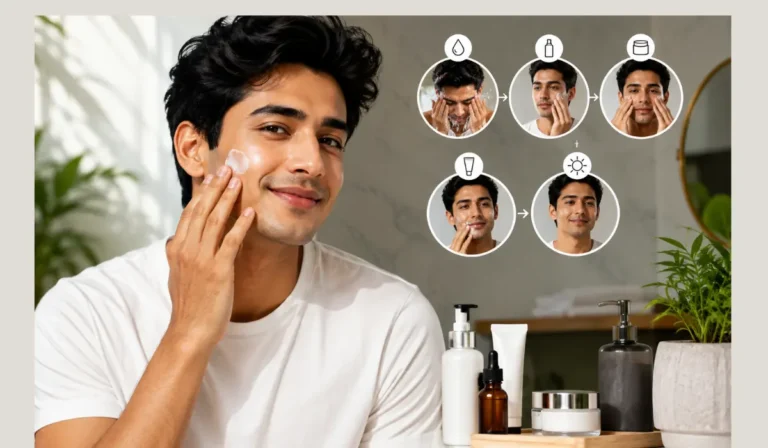
Most people can achieve the majority of their skincare goals with a straightforward five-step routine, none of which requires luxury pricing:
- Gentle cleanser — removes dirt and makeup without stripping the skin barrier
- Vitamin C serum (morning) — antioxidant protection and brightening
- Moisturizer with ceramides or hyaluronic acid — maintains hydration and barrier function
- Broad-spectrum SPF 30+ (daily, non-negotiable) — the single most protective step in any routine
- Retinoid (night) — supports cell turnover, texture, and long-term anti-aging results
Every one of these is available at multiple price points, and none of them requires the top shelf to be effective. If you want a ready-made version of this approach, this minimal 5-step skincare routine breaks it down into an easy daily sequence without any luxury products required.
Frequently Asked Questions
Is expensive skincare a waste of money?
Not always, but it’s not automatically worth the price either. What matters is the active ingredients and formulation quality, not the price tag. Some luxury products are genuinely well-formulated; the price alone just isn’t proof of that.What ingredients should I actually look for in skincare?
Retinoids, niacinamide, vitamin C, peptides, ceramides, and hyaluronic acid all have strong evidence behind them and are available across nearly every price range.Is drugstore sunscreen as good as expensive sunscreen?
Yes, as long as it’s broad-spectrum SPF 30 or higher. The most important factor is that you actually wear it consistently every day — the best sunscreen is the one you’ll use.Do expensive moisturizers hydrate skin better than cheap ones?
Not necessarily. A simple formula with ceramides, glycerin, or hyaluronic acid hydrates effectively regardless of price point.Why do luxury skincare brands cost so much more than the ingredients are worth?
A large portion of the price covers marketing, packaging, brand equity, and retail markup rather than extra efficacy — a pattern economists describe as a “Veblen good,” where the high price itself is part of the appeal.
Key Takeaways
- Price is not evidence of effectiveness — dermatologists are consistent on this point.
- Active ingredients (retinoids, niacinamide, vitamin C, peptides) drive results, and they exist at every price point.
- A large share of luxury skincare pricing goes toward marketing and branding, not extra performance.
- Consistency in using a suitable routine matters more than how much any single product costs.
- Spend more where it counts — sunscreen and treatment-specific actives — and save on cleansers and basic moisturizers.
- Avoid both extremes: don’t assume “expensive = better,” and don’t assume “cheapest = smartest” either. Judge the formulation, not the shelf it’s sitting on.
The real answer to “is expensive skincare better” isn’t yes or no — it’s that price was never the right question to begin with. The ingredient list is. Once you start reading labels instead of price tags, the whole aisle gets a lot less confusing.