
Dry, Frizzy Hair? Try This Simple Hair Care Routine for Smooth Hair
Here’s the thing nobody tells you about frizz: it’s not really a hair type. It’s a symptom.
Frizzy hair isn’t just “how your hair is.” It’s your hair’s outer layer — the cuticle — lifting up and grabbing moisture from the air because the inside of the strand is dry and under-nourished. Once you understand that, frizz stops feeling like a mystery you have to fight every morning and starts feeling like something you can actually fix.
This routine isn’t about piling on more products. It’s about doing the right things, in the right order, consistently — which, according to dermatologists, is genuinely the biggest factor separating hair that stays smooth from hair that doesn’t.
Quick Answer
Dry, frizzy hair happens when the hair’s outer cuticle lifts due to lack of internal moisture, causing strands to grab humidity from the air and puff up. The fix is a consistent routine built around three pillars: gentle cleansing with a sulfate-free shampoo, conditioning to restore moisture and smooth the cuticle, and protecting hair with a leave-in product or heat protectant. According to the Cleveland Clinic, washing hair every two to three days — not daily — helps preserve the natural oils that keep frizz under control. Add a weekly deep-conditioning mask, minimize heat styling, and dry hair gently instead of rubbing it with a towel, and most people see a real, visible improvement in texture within a few weeks.
Table of Contents
- What’s Actually Causing Your Frizz
- The 3-Pillar Routine: Cleanse, Condition, Protect
- Step-by-Step: Your Wash Day Routine
- The Weekly Reset: Deep Conditioning
- What to Do Between Wash Days
- Common Mistakes That Make Frizz Worse
- What to Look For in Products (Ingredients That Actually Help)
- Diet and Lifestyle: The Part People Skip
- How Long Until You See Results
- When to See a Dermatologist Instead
- Myths vs Facts
- Key Takeaways
- Frequently Asked Questions
What’s Actually Causing Your Frizz
Before fixing anything, it helps to understand what’s actually happening at the strand level.
Healthy hair has a smooth, flat outer layer called the cuticle, made of overlapping cells like tiny shingles on a roof. When those shingles lie flat, light reflects evenly off your hair, which is what gives smooth hair its shine. When the hair shaft is dry — from heat styling, harsh shampoos, over-processing, or environmental damage — those cuticle “shingles” lift up. Humid air gets underneath them, swells the strand, and that’s the frizzy, fuzzy texture you’re fighting.
In other words: frizz is your hair reacting to being under-moisturized. It’s not random, and it’s not something only certain hair types are stuck with permanently — it’s a repair problem, not a personality trait of your hair.
Common triggers include:
- Frequent heat styling without protection
- Harsh, sulfate-heavy shampoos that strip natural oils
- Over-processing from color, bleach, or chemical treatments
- Hot water during washing, which lifts the cuticle further
- Rough towel-drying
- Low humidity or, ironically, high humidity combined with an already-dry cuticle
The 3-Pillar Routine: Cleanse, Condition, Protect
Think of this the same way you’d think about a basic skincare routine: cleanse, treat, protect. Skip a step, and the other two can’t fully do their job.
Pillar 1 — Cleanse. The goal isn’t to strip your hair completely; it’s to clean the scalp and remove buildup without removing the natural oils your hair actually needs.
Pillar 2 — Condition. This is where moisture actually gets restored, particularly to your mid-lengths and ends, which are the oldest and driest part of every strand. According to hair cosmetics research reviewed by the NIH, conditioners work in part by neutralizing the hair fiber’s negative electrical charge — which is exactly the mechanism that reduces frizz and makes hair easier to detangle.
Pillar 3 — Protect. This step locks moisture in and shields your hair from the things that undo all the work you just did — heat, UV exposure, and everyday friction from pillows, scarves, or wind.
Step-by-Step: Your Wash Day Routine
- Pre-treat (optional, but genuinely useful for dry hair). Apply a small amount of coconut, argan, or olive oil to dry hair, focusing on the ends, and leave it on for 15–30 minutes before washing. This is called a “pre-poo” treatment, and it gives your cuticle a buffer against the cleansing step.
- Wash with lukewarm water, not hot. Hot water lifts the cuticle immediately — it’s one of the fastest ways to trigger frizz, even with a great shampoo. Keep the water warm at most.
- Use a sulfate-free shampoo. Traditional shampoos often rely on harsh detergents that strip away the natural oils your hair needs to stay smooth. A gentler, sulfate-free formula cleans the scalp without over-drying the strand.
- Condition every time you wash — don’t skip it. Focus conditioner on your mid-lengths and ends, not your scalp, since the scalp produces its own oils and doesn’t need the extra product.
- Rinse with cool water at the end. This helps flatten the cuticle back down after conditioning, locking in the moisture and shine.
- Dry gently — never rub. Aggressively rubbing hair with a regular towel roughs up the cuticle and directly causes frizz and tangles. Instead, use a microfiber towel or an old cotton t-shirt to gently scrunch and dab out excess water.
- Apply a leave-in conditioner or serum to damp hair. Focus on the ends, where hair is oldest and driest. This adds a protective, smoothing layer that continues working as your hair air-dries or gets styled.
- If heat styling, always use a heat protectant first, and keep tools under about 190°C (375°F) when possible.
The Weekly Reset: Deep Conditioning
A daily routine alone often isn’t enough for genuinely dry or damaged hair — this is where a weekly deep conditioning mask earns its place.
While a regular conditioner smooths the surface temporarily, a deep conditioning mask is left on longer and formulated with more concentrated ingredients designed to work further into the strand, not just coat the outside. Current formulations increasingly rely on hydrolyzed protein and bond-building ingredients that mimic the hair’s natural structure, helping “fill in” the microscopic gaps in the cuticle caused by heat, color, or general wear.
How to use it: apply to clean, damp hair, focus on mid-lengths to ends (avoiding the scalp, which doesn’t need it), leave on for the time specified on the product — often 10–20 minutes — then rinse with cool water.
Once a week is a reasonable starting point for most dry or frizzy hair types; those with very damaged or high-porosity hair (hair that absorbs moisture quickly but also loses it quickly) may benefit from doing this twice a week.
What to Do Between Wash Days
Frizz control doesn’t stop once your hair is dry. A few habits make a real difference between washes:
- Sleep on a satin or silk pillowcase, or wrap hair loosely, to reduce the friction that causes frizz and breakage overnight.
- Refresh with a light water-and-leave-in-conditioner mix if your hair looks dry mid-week, rather than rewashing, which can strip oils you’re trying to preserve.
- Avoid tight hairstyles that repeatedly pull on the same section of hair — this creates stress points that show up as frizz and breakage over time.
- Use a small amount of hair oil on the ends only if you’re dealing with dryness between washes — a little goes a long way, and too much can leave hair looking greasy rather than smooth.
Common Mistakes That Make Frizz Worse
- Washing hair every single day. According to the Cleveland Clinic, washing every two to three days is ideal for most people — daily washing strips the natural oils that actually help control frizz.
- Skipping conditioner to “save time.” This is one of the most common routine gaps, and it directly undercuts the moisture-restoring step your hair needs most.
- Using the same products year-round. Hair often needs richer, more moisturizing products in dry winter months or high-heat seasons, and lighter formulas in humid ones.
- Brushing hair while soaking wet. Hair is at its most fragile when wet; use a wide-tooth comb starting from the ends and working up, rather than a brush from root to tip.
- Overdoing heat styling without protection. Even occasional heat exposure without a protectant compounds damage over time.
- Ignoring split ends. Trimming every 8–10 weeks prevents existing damage from traveling further up the strand.
What to Look For in Products (Ingredients That Actually Help)
You don’t need a 12-step product routine — but a few ingredient categories are genuinely worth prioritizing when reading labels:
| Look For | What It Does |
|---|---|
| Sulfate-free surfactants | Cleanses without stripping natural oils that protect against frizz |
| Hyaluronic acid | Pulls moisture into the hair fiber during washing |
| Hydrolyzed protein / keratin | Helps temporarily fill gaps in a damaged cuticle, improving smoothness |
| Silicones or silicone alternatives | Coats the strand to seal in moisture and reduce frizz (fine in moderation; can cause buildup if overused without proper cleansing) |
| Natural oils (argan, coconut, jojoba) | Add slip and shine, useful in pre-treatments and leave-in products |
| Heat protectant polymers | Create a barrier between hair and styling tool heat, reducing thermal damage |
Diet and Lifestyle: The Part People Skip
Hair health isn’t only about what you put on your hair — it’s also connected to what’s happening inside your body. There’s no single miracle food that transforms hair overnight, but a consistently balanced diet plays a real, supporting role.
Dermatologists commonly point to a protein-rich diet — lean meats, beans, lentils, and fish — as foundational, since hair itself is largely made of protein. Antioxidant-rich foods like berries, dark leafy greens, and dark chocolate are also frequently recommended. Trace minerals including iron, zinc, magnesium, and biotin also play a role in hair health, which is part of why some people consider a general multivitamin if their diet has gaps — though this is worth discussing with a doctor rather than assuming supplementation is automatically needed.
How Long Until You See Results
Set realistic expectations, because this matters for actually sticking with a routine:
- Within 1–2 weeks: Hair typically feels softer and less rough to the touch, especially if you’ve switched to a sulfate-free shampoo and added a leave-in conditioner.
- Around 4–6 weeks: Visible reduction in frizz and improved manageability, particularly with consistent weekly deep conditioning.
- Around 3 months: For more significant damage, a realistic goal is roughly 30–50% less breakage, along with smoother overall texture — genuine repair takes time, since hair itself doesn’t “heal” the way skin does; it can only be smoothed and protected until the damaged section eventually grows out or is trimmed.
Severely damaged hair — from heavy chemical processing, for example — may never fully return to its pre-damage state at the same strand; the most reliable long-term fix in those cases is consistent care going forward combined with regular trims.
When to See a Dermatologist Instead
A routine adjustment solves most dryness and frizz issues, but it’s worth seeing a board-certified dermatologist or trichologist if you notice:
- Hair shedding that continues beyond 3–6 months
- Scalp pain, scaling, redness, or inflammation alongside dryness
- Sudden, patchy hair loss rather than gradual thinning
- No improvement at all despite a consistent, proper routine for 2–3 months
These can signal an underlying scalp condition, hormonal issue, or nutritional deficiency that a topical routine alone won’t fix.
Myths vs Facts
| Myth | Fact |
|---|---|
| Washing hair daily keeps it cleaner and healthier | Daily washing strips natural oils and often makes dryness and frizz worse; every 2–3 days is ideal for most people |
| Frizzy hair is just a hair “type” you can’t change | Frizz is primarily a moisture and cuticle-damage issue, and is genuinely improvable with a consistent routine |
| More product always means smoother hair | Overloading hair with product can cause buildup, which actually weighs hair down and traps dirt |
| Conditioner should be applied all over, including the scalp | Conditioner works best on mid-lengths and ends; scalp application can leave roots looking greasy |
| Hot water opens the hair for better product absorption | Hot water lifts the cuticle and worsens frizz; lukewarm water for washing and cool water for rinsing is better |
Key Takeaways
- Frizz happens when the hair’s outer cuticle lifts due to internal dryness, allowing humidity to swell the strand.
- A consistent 3-pillar routine — cleanse, condition, protect — addresses the root cause rather than just masking symptoms temporarily.
- Washing every 2–3 days, using a sulfate-free shampoo, and always conditioning are the biggest daily-habit fixes.
- Weekly deep conditioning with hydrolyzed protein or bond-building ingredients meaningfully improves texture over time.
- Gentle drying (no rough towel rubbing) and heat protection before styling prevent new damage from undoing your progress.
- Diet plays a genuine, supporting role — protein, antioxidants, and key minerals matter for hair health, though no single food is a shortcut.
- Real improvement typically shows up within weeks, with more significant repair taking around 3 months of consistency.
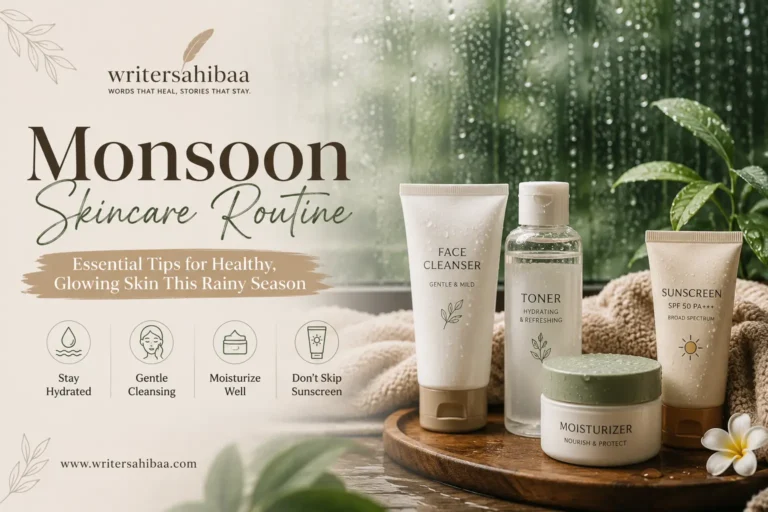
Also read our blog for a complete minimal monsoon skincare routine.
Frequently Asked Questions
1. What actually causes frizzy hair?
Frizz happens when the hair’s outer cuticle layer lifts due to internal dryness, allowing moisture from the air to enter and swell the strand, creating a fuzzy, uneven texture.2. How often should I wash frizzy hair?
According to the Cleveland Clinic, washing every 2–3 days is ideal for most people. Daily washing tends to strip natural oils and can make dryness and frizz worse.3. Do I really need a sulfate-free shampoo?
For dry, color-treated, or frizz-prone hair, yes — sulfate-free formulas clean without stripping the natural oils that help control frizz. Oily or fine hair types may still benefit from an occasional clarifying shampoo.4. What’s the difference between conditioner and a deep conditioning mask?
Regular conditioner smooths the surface temporarily with daily use, while a deep conditioning mask is left on longer and formulated with more concentrated ingredients to work further into the strand for longer-lasting repair.5. Should I apply conditioner to my scalp?
No. Focus conditioner on mid-lengths and ends, where hair is oldest and driest. The scalp produces its own natural oils and doesn’t need added product.6. How long does it take to fix dry, frizzy hair?
Many people notice softer, more manageable hair within 1–2 weeks of a consistent routine, with more visible frizz reduction around 4–6 weeks, and deeper repair around 3 months.7. Can diet really affect how frizzy my hair is?
Yes, to a supporting degree. A protein-rich, antioxidant-rich diet with adequate iron, zinc, and biotin supports overall hair health, though it works alongside — not instead of — a proper hair care routine.8. Is it bad to towel-dry frizzy hair?
Rubbing hair aggressively with a regular towel roughs up the cuticle and increases frizz. Use a microfiber towel or cotton t-shirt to gently scrunch out excess water instead.9. When should I see a dermatologist about frizzy or dry hair?
If you notice ongoing shedding beyond 3–6 months, scalp pain or scaling, sudden patchy hair loss, or no improvement despite a consistent routine for 2–3 months, it’s worth seeing a dermatologist or trichologist.10. Can frizzy hair be permanently fixed?
Existing damage on a strand can be smoothed and protected but not fully reversed at that exact point — the most reliable long-term fix is a consistent routine going forward combined with regular trims to remove old damage as it grows out.
Conclusion
Frizzy hair isn’t a flaw you’re stuck managing forever — it’s your hair asking, fairly directly, for more consistent moisture and gentler handling. The fix isn’t complicated or expensive: clean gently, condition every time, protect what you’ve restored, and give your hair a proper weekly reset.
Stick with it for a few weeks before judging results. Hair repair isn’t instant, but it is genuinely achievable — and once you understand the “why” behind each step, it stops feeling like guesswork and starts feeling like a routine you can actually stay consistent with.