Education Ministers of India From 1947 to 2026: Complete List, Tenure, Major Reforms & Contributions
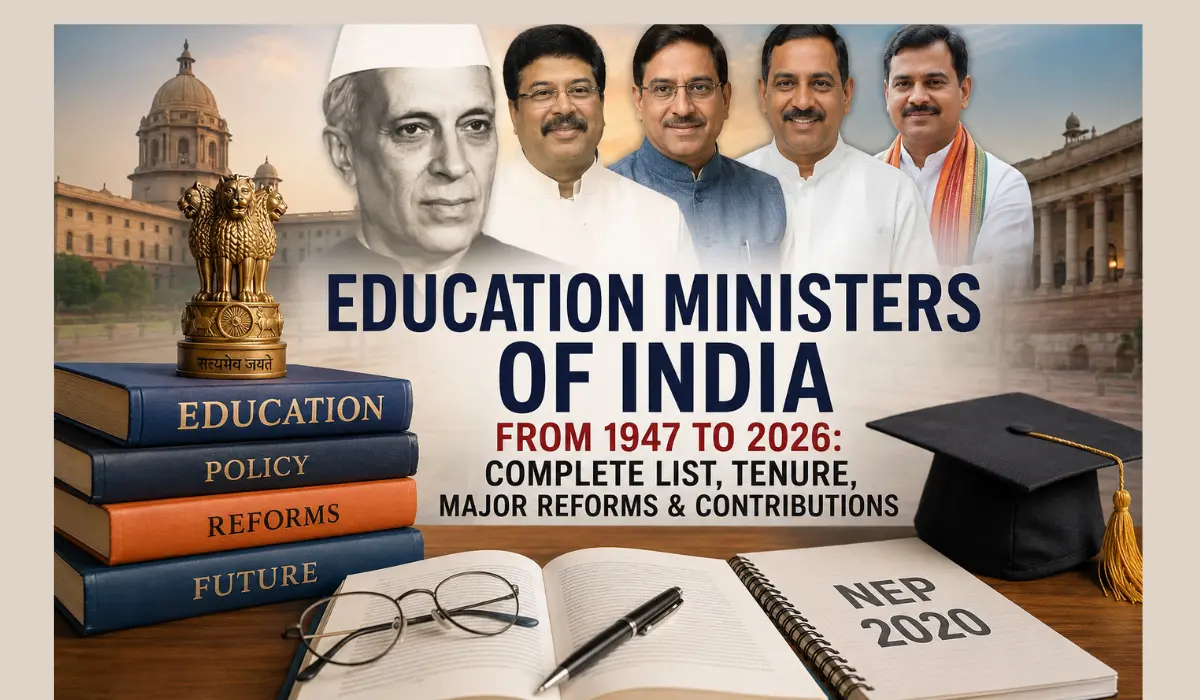
India has had 35 Union Education Ministers since Independence. Maulana Abul Kalam Azad was the first, serving from 1947 to 1958. As of August 2026, Pralhad Joshi is the Union Education Minister of India, holding additional charge after Dharmendra Pradhan’s resignation on 25 July 2026. In between, leaders like Kapil Sibal, Smriti Irani, Prakash Javadekar, and Ramesh Pokhriyal shaped everything from the Right to Education Act to the National Education Policy 2020.
The Education Ministry doesn’t usually make front-page news — until it does. A change in leadership at this ministry means a change in direction for how nearly 250 million schoolchildren and tens of millions of college students experience learning. This guide walks through every minister who has held the post since 1947, what they changed, and how the ministry itself evolved along the way.
Who Is the Current Education Minister of India in 2026?
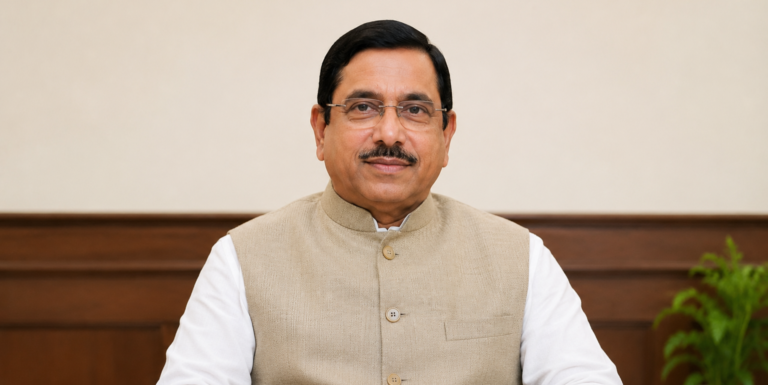
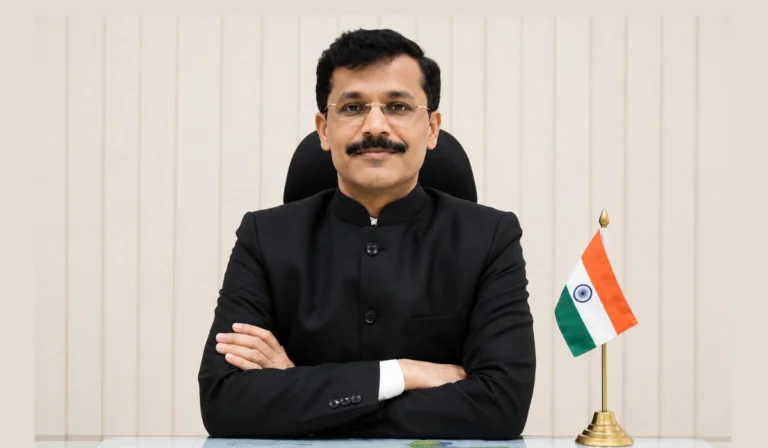
Pralhad Joshi is currently serving as the Union Education Minister of India, holding the portfolio on an additional basis.
He took charge on 26 July 2026, a day after President Droupadi Murmu accepted Dharmendra Pradhan’s resignation. Joshi is a senior BJP leader and a five-time Lok Sabha MP from Dharwad, Karnataka. Alongside Education, he continues to hold his existing portfolios — Consumer Affairs, Food & Public Distribution, and New & Renewable Energy.
| Particular | Details |
|---|---|
| Current Minister | Pralhad Joshi |
| Assumed Charge | 26 July 2026 |
| Status | Additional charge |
| Previous Minister | Dharmendra Pradhan |
| Party | Bharatiya Janata Party (BJP) |
| Constituency | Dharwad, Karnataka |
Why Did Dharmendra Pradhan Resign?
Dharmendra Pradhan, who had led the ministry since July 2021, resigned on 25 July 2026 following nationwide student protests over a NEET-UG paper leak and demands for accountability. His tenure was largely defined by the rollout of NEP 2020 — including PM SHRI Schools, the Academic Bank of Credits, the National Credit Framework, and the Anusandhan National Research Foundation (ANRF) for boosting research funding.
Complete List of Education Ministers of India (1947–2026)
Here is the full chronological list of every individual who has headed the Ministry of Education (earlier the Ministry of Human Resource Development) since Independence.
| S.No | Education Minister | Tenure |
|---|---|---|
| 1 | Maulana Abul Kalam Azad | 1947–1958 |
| 2 | Dr. K. L. Shrimali | 1958–1963 |
| 3 | Humayun Kabir | 1963 |
| 4 | M. C. Chagla | 1963–1966 |
| 5 | Fakhruddin Ali Ahmed | 1966–1967 |
| 6 | Triguna Sen | 1967–1969 |
| 7 | V. K. R. V. Rao | 1969–1971 |
| 8 | S. S. Ray | 1971–1972 |
| 9 | Syed Nurul Hasan | 1972–1977 |
| 10 | P. C. Chunder | 1977–1979 |
| 11 | B. Shankaranand | 1979–1980 |
| 12 | S. B. Chavan | 1980–1981 |
| 13 | Syed Nurul Hasan | 1981–1982 |
| 14 | K. C. Pant | 1982–1984 |
| 15 | P. V. Narasimha Rao | 1984–1985 |
| 16 | K. C. Pant | 1985–1986 |
| 17 | P. V. Narasimha Rao | 1986–1988 |
| 18 | R. Venkataraman | 1988–1989 |
| 19 | P. Shiv Shankar | 1989–1990 |
| 20 | V. P. Singh | 1990 |
| 21 | Arjun Singh | 1991–1994 |
| 22 | Madhavrao Scindia | 1994–1995 |
| 23 | S. R. Bommai | 1995–1996 |
| 24 | Atal Bihari Vajpayee | 1996 |
| 25 | Mufti Mohammad Sayeed | 1996–1997 |
| 26 | Ramlakhan Singh Yadav | 1997–1998 |
| 27 | Dr. Murli Manohar Joshi | 1998–2004 |
| 28 | Arjun Singh | 2004–2009 |
| 29 | Kapil Sibal | 2009–2012 |
| 30 | M. M. Pallam Raju | 2012–2014 |
| 31 | Smriti Irani | 2014–2016 |
| 32 | Prakash Javadekar | 2016–2019 |
| 33 | Ramesh Pokhriyal “Nishank” | 2019–2021 |
| 34 | Dharmendra Pradhan | 2021–25 July 2026 |
| 35 | Pralhad Joshi (Additional Charge) | 26 July 2026–Present |
A few names appear more than once on this list — Syed Nurul Hasan, K. C. Pant, P. V. Narasimha Rao, and Arjun Singh all served non-consecutive terms across different governments, which is why the ministry has had 35 tenures but fewer than 35 distinct individuals.
The First Education Minister: Maulana Abul Kalam Azad
Maulana Abul Kalam Azad became India’s first Education Minister on 15 August 1947 and remained in office until 1958 — the longest single tenure of any Education Minister in Indian history.
A freedom fighter, scholar, and senior Congress leader, Azad laid the structural foundation of India’s modern education system. His major contributions include:
- Setting the groundwork for the Indian Institutes of Technology (IITs)
- Establishing the University Grants Commission (UGC) in 1956
- Founding key cultural institutions — the Sangeet Natak Akademi, Sahitya Akademi, and Lalit Kala Akademi
- Promoting universal primary education and adult literacy
- Championing scientific research and technical education
Because of this legacy, his birth anniversary, 11 November, is observed every year as National Education Day.
Who Was the First Woman to Head the Education Ministry?
Smriti Irani became the first woman to serve as Union Education Minister when she took charge of the Ministry of Human Resource Development in 2014.
It’s worth clearing up a common mix-up here: Anandiben Patel is sometimes cited as India’s “first female education minister,” but she held that portfolio at the state level in Gujarat (2002–2007), not at the Union level. The distinction matters for anyone using this list for exam preparation or general reference.
How the Ministry Itself Has Changed Names
The Education Ministry hasn’t always gone by that name. Its identity has shifted twice, each time reflecting a change in how India thought about education’s role in national policy.
| Year | Change |
|---|---|
| 1947 | Ministry of Education established at Independence |
| 1985 | Renamed Ministry of Human Resource Development (MHRD) under Rajiv Gandhi’s government |
| 2020 | Renamed back to Ministry of Education following the rollout of NEP 2020 |
Today, the ministry operates through two departments — the Department of School Education & Literacy and the Department of Higher Education — each handling a distinct slice of India’s education pipeline.
Major Educational Reforms and Which Minister Led Them
Three reforms stand out as genuine turning points for Indian education. Here’s what each one did and who was in charge when it happened.
National Policy on Education, 1986 — under P. V. Narasimha Rao
Introduced during Rajiv Gandhi’s government, this policy pushed for:
- Universal elementary education
- Reformed teacher education
- Expanded adult literacy programs
- More equal access across regions and gender
Right to Education Act, 2009 — under Kapil Sibal
Passed during the UPA government and implemented through Kapil Sibal’s tenure, the RTE Act made free and compulsory education a legal right for every child aged 6 to 14 — one of the few times education moved from “policy” to “fundamental right” in India.
National Education Policy, 2020 — under Ramesh Pokhriyal “Nishank”
NEP 2020 is widely regarded as the most sweeping education reform in over three decades. Its core changes include:
- A new 5+3+3+4 curriculum structure replacing the old 10+2 system
- Emphasis on multidisciplinary learning over rigid streams
- Instruction in the mother tongue for early grades
- Vocational education introduced from the school level itself
- Multiple entry and exit points in higher education
- The Academic Bank of Credits for portable, stackable qualifications
Dharmendra Pradhan carried NEP 2020 through its implementation phase from 2021 onward, while Pralhad Joshi is now continuing the rollout and overseeing the next phase of India’s education reforms. For a closer look at his background, political career, and role as Education Minister, read our detailed Pralhad Joshi profile.
Digital Education Initiatives Across Recent Tenures
Ministers over the last decade have leaned heavily into technology-driven learning, launching or expanding:
- DIKSHA — a national digital infrastructure for teachers and students
- SWAYAM — free online courses across school and higher education
- PM eVidya — a unified digital-plus-broadcast education initiative
- National Digital Library of India
- PM SHRI Schools — model schools showcasing NEP implementation
- Virtual Labs for science and engineering students
What Does the Education Minister Actually Do?
The Union Education Minister’s responsibilities span nearly every layer of India’s learning system:
- Framing and revising national education policy
- Overseeing both school and higher education
- Coordinating teacher training standards nationwide
- Directing digital learning infrastructure
- Funding and guiding research and innovation
- Managing international academic partnerships
- Aligning skill development programs with formal education
Frequently Asked Questions
Who is the current Education Minister of India in 2026?
Pralhad Joshi is the current Union Education Minister, holding the position on additional charge since 26 July 2026.Who was the first Education Minister of independent India?
Maulana Abul Kalam Azad, who served from 15 August 1947 until 1958.Why is 11 November celebrated as National Education Day?
It marks the birth anniversary of Maulana Abul Kalam Azad, in recognition of his role in building India’s education system.Who was the first woman Union Education Minister?
Smriti Irani, who took charge of the Ministry of Human Resource Development in 2014.How many Education Ministers has India had since 1947?
35 tenures across roughly 30 individuals, since a few leaders — including Arjun Singh and P. V. Narasimha Rao — served more than once.Why did Dharmendra Pradhan resign as Education Minister?
He stepped down on 25 July 2026 amid nationwide student protests over a NEET-UG paper leak and calls for accountability.What was the biggest education reform in Indian history?
Most experts point to the National Education Policy 2020, introduced under Ramesh Pokhriyal “Nishank,” as the most far-reaching reform since the 1986 policy — restructuring curriculum, exit flexibility, and language of instruction nationwide.
Key Takeaways
- India has had 35 Education Minister tenures since 1947, starting with Maulana Abul Kalam Azad.
- The ministry was renamed MHRD in 1985 and reverted to Ministry of Education in 2020.
- Kapil Sibal oversaw the Right to Education Act (2009); Ramesh Pokhriyal “Nishank” oversaw NEP 2020.
- Smriti Irani was the first woman to head the ministry at the Union level (2014).
- Pralhad Joshi is the current minister (additional charge), succeeding Dharmendra Pradhan, who resigned on 25 July 2026 following NEET-UG paper leak protests.