
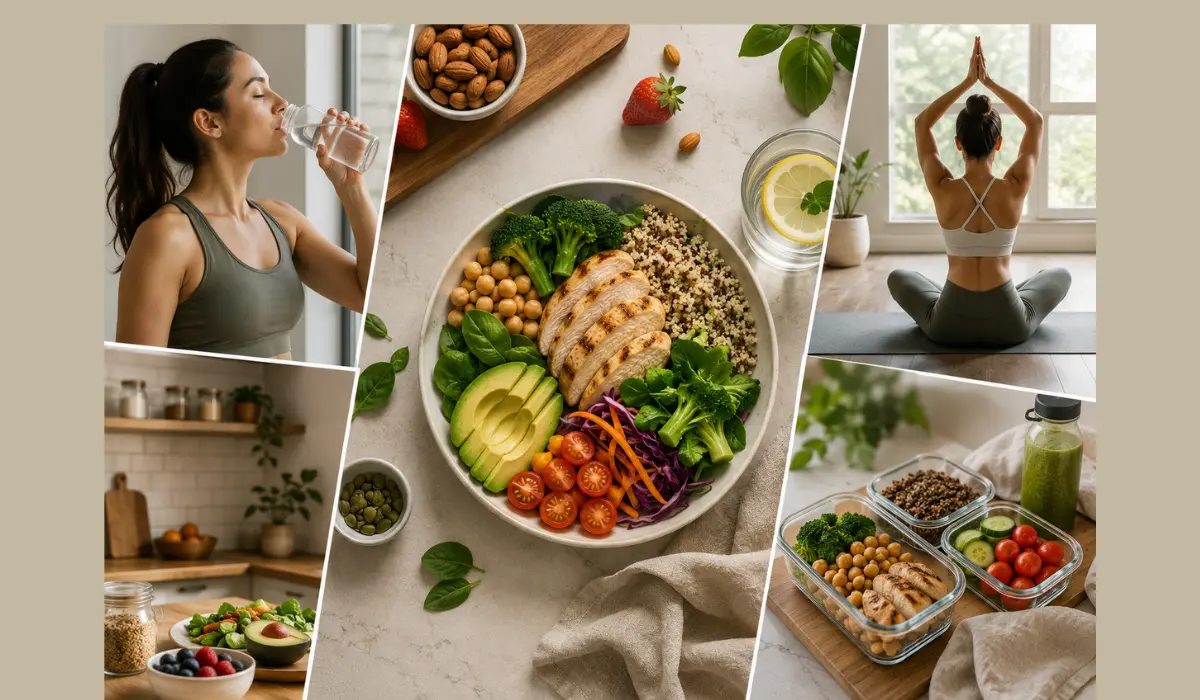
Healthy Diet Tips for Women That Actually Work to Get Perfect Shape
Search “diet tips for women” and you’ll get the same recycled advice: cut carbs, drink detox tea, starve until Saturday. None of it explains why your body isn’t responding — and almost none of it accounts for the fact that a woman’s nutritional needs are genuinely different from a man’s.
This isn’t another 30-day miracle plan. It’s what actually happens inside your body when you eat, backed by Harvard Health, Mayo Clinic, the CDC, and the National Institutes of Health — explained in a way you can use starting today.
Quick Answer
The healthiest diet for women combines a produce-heavy plate (Harvard’s 50-25-25 method), roughly 18 mg of iron a day during reproductive years, 150 minutes of weekly movement, and a weight-loss pace of no more than 1–2 pounds a week. Anything promising faster, dramatic results is working against your metabolism, not with it.
Here’s the science behind each part — and the mistakes quietly working against you.
At a Glance: What Doctors Actually Recommend
| Factor | Recommended for Women | Why It Matters |
|---|---|---|
| Plate composition | ½ vegetables/fruit, ¼ whole grains, ¼ protein | Harvard’s Healthy Eating Plate, built independent of food-industry influence |
| Iron intake | 18 mg/day (premenopausal) | More than double the 8 mg/day men need, due to menstrual blood loss |
| Weekly activity | 150 minutes moderate exercise + 2 strength sessions | CDC’s minimum threshold for measurable health benefit |
| Safe weight loss | 1–2 lbs (0.5–1 kg) per week | Mayo Clinic’s benchmark for loss that actually stays off |
| “Perfect shape in 1 month” | Not realistic or safe | Rapid-loss claims typically reflect water weight, not fat loss |
The One Question Nobody Asks: Why Do Women’s Bodies Need Something Different?
Most diet content is written as if bodies are interchangeable. They’re not. Premenopausal women lose iron every month through menstruation — and it shows up in ways most people never connect to diet: constant tiredness, brain fog, hair that won’t stop shedding, or feeling cold when everyone else is fine.
The Institute of Medicine’s dietary reference data is blunt about the gap: the Recommended Dietary Allowance for iron is 8 mg/day for men and postmenopausal women — but 18 mg/day for premenopausal women, more than double. And yet the average woman only consumes around 12 mg/day from food. That’s not a small shortfall. It’s a chronic, invisible deficit that most “diet tips” articles never even mention.
Fix it with food, not supplements first: lentils, chickpeas, spinach, pumpkin seeds, and lean meat, paired with a vitamin-C source (lemon, amla, citrus) to boost absorption. Skip the tea or coffee immediately after — it blocks iron uptake.
What Should Actually Be on Your Plate? (Harvard’s Answer, Not a Guess)
Forget calorie math for a second. Harvard T.H. Chan School of Public Health’s Healthy Eating Plate — designed by nutrition scientists with zero food-industry funding — reduces the entire question to one visual:
- Half your plate: vegetables and fruit, in as many colors as possible (potatoes and fries don’t count here — they behave like refined starch)
- A quarter of your plate: whole grains — brown rice, whole wheat, oats — not refined white versions
- A quarter of your plate: protein — fish, beans, nuts, seeds, poultry, eggs — while limiting red meat, bacon, and processed cold cuts
- Cooking fat: olive or canola oil, used freely; butter, used sparingly
- To drink: water, coffee, or tea instead of sugary beverages
This isn’t a restrictive “diet.” It’s a ratio you can apply to a home-cooked thali, a restaurant plate, or a packed lunch — without ever weighing your food.
How Fast Should You Actually Lose Weight? (The Number Most Ads Hide)
Here’s the uncomfortable truth behind every “flat stomach in 30 days” headline: doctors consider 1 to 2 pounds (0.5–1 kg) per week the safe, sustainable ceiling — not the starting point for a miracle month.
Mayo Clinic’s weight-management guidance is explicit: that pace comes from real lifestyle change, not short-term restriction — and it’s the version of weight loss that actually stays off. Some clinicians place the safe range slightly wider, from 0.5 to 2 pounds a week, but the message is consistent — faster loss, when it happens safely, needs medical supervision, not a crash diet.
Do the math over four weeks: that’s roughly 2–8 pounds of genuine fat loss. Less dramatic than an ad promises. Far more likely to actually last.
Do You Really Need the Gym? (CDC’s Real Answer)
No — but you do need to move consistently. The CDC’s Physical Activity Guidelines set the bar at 150 minutes of moderate activity per week, plus two days of strength work. Broken down, that’s just over 20 minutes a day — a brisk walk counts. So does cycling, dancing, or a fast-paced household cleaning session.
For strength, you don’t need a barbell. Push-ups, resistance bands, and certain styles of yoga all count as muscle-strengthening activity — and doing this twice a week protects bone density, which becomes increasingly important for women with age.
Your Realistic 4-Week Plan (Not a Crash Plan)
| Week | Focus | Action |
|---|---|---|
| 1 | Reset your plate | Apply the half-vegetable rule at lunch and dinner; swap one sugary drink for water daily |
| 2 | Add movement | 20–30 minutes of brisk walking, 5 days a week |
| 3 | Close nutrient gaps | Add one iron-rich food + one vitamin-C food daily; protect 7–8 hours of sleep |
| 4 | Build strength | Add two short bodyweight strength sessions; track what’s actually working |
By day 30, you won’t have a “perfect shape” — you’ll have a system that keeps improving long after the month ends. That’s the actual win.
5 Mistakes Quietly Undoing Your Progress
- Skipping meals to “save calories.” Backfires into overeating later and worsens energy crashes.
- Cutting out entire food groups (all carbs, all fats) without medical reason — both belong on Harvard’s plate.
- Weighing yourself daily. Weight fluctuates with water, hormones, and digestion; weekly trends are what matter.
- Ignoring sleep. Poor sleep disrupts hunger hormones as much as food choices do.
- Trusting “detox” diets. No food or drink clears toxins faster than your liver and kidneys already do — this is standard medical consensus, not a fringe opinion.
Frequently Asked Questions
Can I actually see results in one month?
Yes — but expect it in energy, digestion, skin, and roughly 2–8 pounds of steady loss, not a full transformation. Mayo Clinic’s benchmark for sustainable loss is 1–2 pounds a week, and that pace is what protects long-term results.Do women need a different diet than men?
Not a different diet — different emphasis. Iron (18 mg/day vs. 8 mg/day for men), calcium for bone health, and folate if pregnancy is possible are the biggest gaps generic diet advice misses.Is losing more than 2 pounds a week safe?
Not without medical supervision. It’s occasionally done safely under a doctor’s guidance, but as a default, slower loss is easier to maintain and is the standard medical recommendation.What’s the one change to make today?
Fill half your next plate with vegetables. It’s the single highest-impact, zero-cost change backed by the research above.Do I need supplements to fix an iron gap?
Food first. Iron-rich foods paired with vitamin C cover most gaps. Supplements matter more for confirmed deficiency, pregnancy, or heavy menstrual loss — talk to a doctor before starting one.
The Bottom Line
No diet, tea, or 30-day plan delivers a “perfect shape” — bodies aren’t a checklist, and health isn’t a finish line you cross and forget. What works is unglamorous: a produce-heavy plate, enough iron, regular movement, real sleep, and patience. Start today, keep it simple, and let month one become month twelve.
This article is for general educational purposes and isn’t a substitute for personalized medical advice. If you have a health condition or are pregnant, talk to your doctor before making significant diet or exercise changes. You can read more blogs by by exploring Writer Sahibaa.